 +91 954 002 5025 (24/7)


To Book an Appointment
Call Us+91 954 002 5025To Book an Appointment
Call Us+91 954 002 5025Prevent Kidney Stones - Causes, Risks, & Treatment Options
By Medical Expert Team
Mar 07 , 2022 | 6 min read

Kidney stones are hard deposits formed by minerals and salts crystallizing in your kidneys. The kidneys are a pair of fist-sized organs that control the fluid levels of the body. They perform one of the most important functions necessary for good health, eliminating minerals and salts through the urine.
This guide covers everything you need to know about how to prevent kidney stones, including essential dietary tips and specific foods to avoid, especially for kidney stones.
How Does The Problem Start?
- A high concentration of minerals and salts in the urine.
- Congealing of these into hard deposits or renal calculi.
- Small stones (as small as grains of salt) may pass through urine.
- The larger ones may not, causing pain.
- If there are too many or large stones, or if a stone gets lodged in the urinary tract, kidney stones treatment could require surgical intervention.
Consulting one of the expert doctors at BLK Max Hospital can help treat them.
Understanding Kidney Stones Causes and Risk factors
Kidney stones are made up of salts and minerals such as calcium, oxalate, and uric acid, which can be dissolved and eliminated through urine.
When do kidney stones form?
- Kidney stones form when the concentration of these crystal-forming substances in the urine is high.
- If there is a condition that prevents the urine from dissolving them.
- Some diseases and medications can also cause this to happen.
Major causes and risk factors include
- Dehydration: Not drinking enough water causes dehydration. It is one of the most important causes for the formation of kidney stones.
- Obesity: A high BMI, obesity, and sudden weight gain are all associated with an increased risk of developing kidney stones.
- Dietary causes: A high sodium diet or a diet rich in animal protein increases your risk of kidney stone formation. Consuming a lot of oxalate-rich foods may also cause kidney stones.
- Medical conditions: Certain medical conditions such as hyperparathyroidism, inflammatory bowel disease, and renal tubular acidosis lead to an increased risk of developing kidney stones. Some surgeries like gastric bypass can also cause kidney stones.
- Medications and supplements: Certain medicines and supplements such as calcium supplements, Vitamin C supplements, etc can increase your risk of developing kidney stones.
How to Prevent Kidney Stones: Proven Strategies
Your kidney stone doctors at BLK Max Hospital can help advise you about dietary and lifestyle changes needed to prevent kidney stones. Here are some of the key steps for the prevention of kidney stones.
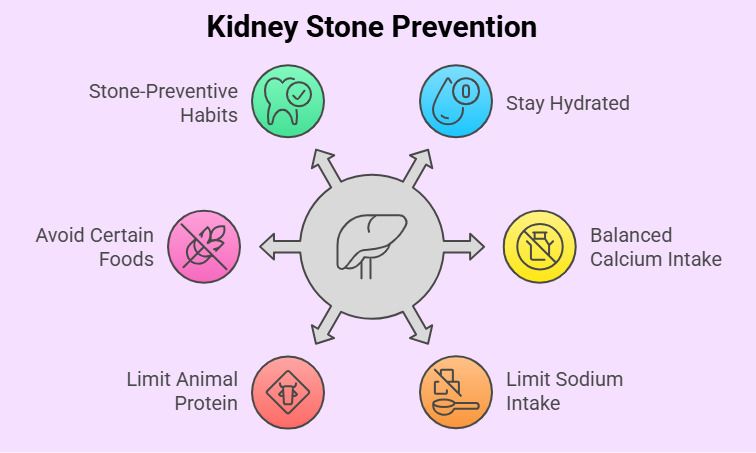
1. Stay Hydrated
Drinking water and staying hydrated is an easy and important way to prevent kidney stones.
Risks of low hydration
- A low intake of water makes the urine more concentrated and less likely to dissolve these salts.
- It could lead to the formation of kidney stones.
- Citrus juices such as orange juice and lemonade are also known to prevent the formation of kidney stones.
Also Read: Dietary Changes You Can Make To Improve Your Kidney Health.
2. Maintain a Balanced Calcium Intake
Some of the commonly found kidney stones are calcium stones. It leads people to erroneously believe that a low calcium intake can prevent kidney stone formation.
- A low calcium diet can increase the risk of kidney stones.
- It can also lead to weak bones.
- Food rich in natural calcium such as dairy milk, yogurt, cheese, etc. should be part of a kidney stones diet.
Some calcium supplements may increase the risk of kidney stones. Talk to your doctor at BLK Max Hospital and find out the recommended dose of calcium supplements, if needed.
3. Limit Sodium Intake
A high intake of sodium, particularly in the form of salt, is considered one of the key reasons for the formation of kidney stones.
- Salt intake inhibits the reabsorption of calcium from the urine.
- Processed and packaged foods contain a high amount of salt and should be avoided.
- Limit the intake of foods that contain monosodium glutamate (MSG or Aji-No-Moto), sodium bicarbonate (baking soda), and sodium nitrate (preservative).
4. Limit Animal Protein Consumption
People on a kidney stones diet should limit their consumption of animal protein.
- Consumption of excess animal protein such as beef, red meat, poultry, pork, and fish can cause the urine to become highly acidic.
- It means that the uric acid and calcium oxalate contents of the urine are higher than normal.
- These foods also reduce the levels of urinary citrate, a chemical that inhibits or prevents stone formation.
5. Foods to Avoid for Kidney Stones
Kidney stones are large, branching stones usually caused by chronic infections or metabolic issues. Certain foods can exacerbate the risk:
- Avoid high-oxalate foods such as spinach, rhubarb, beets, nuts, chocolate, tea, and sweet potatoes.
- Limit purine-rich foods like organ meats, red meat, and shellfish that can increase uric acid.
- Minimize processed and high-sodium foods.
Consult a nephrologist for a customized list based on your stone type.
Read more about - What is Nephrologist?
6. Incorporate Stone-Preventive Dietary Habits
- Combine calcium-rich foods with oxalate-rich foods in meals to prevent oxalate absorption.
- Increase intake of fruits and vegetables to alkalize urine and decrease stone formation risk.
- Reduce intake of sugar-sweetened beverages and high-fructose corn syrup.
Medications and Medical Interventions for Kidney Stone Prevention
In some cases, dietary changes alone aren't enough. Medical therapies such as potassium citrate to alkalize urine or thiazide diuretics to reduce calcium in urine may be prescribed depending on your stone type and recurrence risk. Always consult a urologist before starting any medication for kidney stone prevention.
Surgical Process for Kidney Stones
If you are at high risk for kidney stones, your doctor at BLK Max Hospital may ask you to limit the intake of these foods. Percutaneous Nephrolithotripsy or Percutaneous Nephrolithotomy is a surgical procedure to remove kidney stones that are too large to pass with urine or those which are lodged in the urinary system.
- In the surgery, an incision is made in the back.
- A scope is used to remove the stones.
- The scope is guided by x-ray imaging.
- The Retrograde Intrarenal Surgery (RIRS) surgery is usually performed under general anaesthesia when other treatment options have been ruled out.
Your doctor at BLK Max Hospital will discuss the need, risks, and precautions involved in the surgery if deemed necessary.
Read more about - What is a Urologist and Types of Kidney Stone Surgery.
Lifestyle Habits to Complement Kidney Stone Prevention
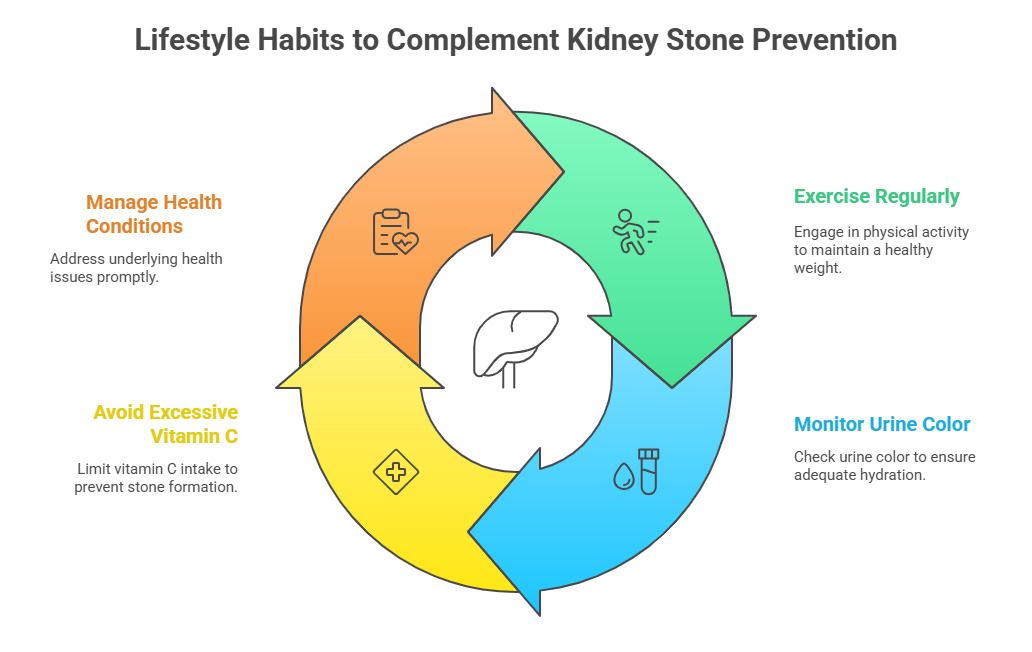
- Maintain a healthy weight through regular exercise.
- Avoid dehydration by monitoring urine color.
- Avoid excessive use of vitamin C supplements which may increase stone formation risk in some individuals.
- Manage underlying health conditions such as urinary tract infections and metabolic disorders promptly.
Know more about - 7 Things To Avoid For a Healthy Kidney.
When to See a Doctor: Signs and Symptoms to Watch
Seek medical advice if you experience:
- Severe and sudden pain in the back or side
- Blood in the urine
- Pain or burning sensation during urination
- Frequent urge to urinate or small urine volumes
- Fever or chills (possible infection)
Early diagnosis and intervention can prevent complications including kidney stones.
Learn more about - 9 Reasons for Back Pain: Causes, Prevention, and Relief.
Final Takeaway
Preventing kidney stones is achievable through proper hydration, balanced diet, limiting risky foods, and working closely with your healthcare provider to manage medications and underlying conditions. Understanding foods to avoid for kidney stones ensures you protect your kidney health effectively.
Know more about - Key Components of a Healthy Diet & Their Daily Importance.
Frequently Asked Questions About Kidney Stone Prevention
1. What is a staghorn stone?
Staghorn stones are large kidney stones strongly associated with urinary tract infections. They often branch out and are treated surgically by Percutaneous Nephrolithotomy.
2. Can kidney stones damage my kidneys?
Kidney stones can cause damage if they are large, recurrent, and associated with infections. The risk associated with your condition will be evaluated by a doctor at BLK Max Hospital and a personalized treatment plan will be drawn up.
3. How do I manage my kidney stone along with my other health problems, such as diabetes and/or a heart disorder?
Inform your doctor of any pre-existing health conditions such as diabetes, hypertension, heart problems. The doctor will consider these when forming a treatment/surgical plan.
Learn more about - 7 Myths About Hypertension and Facts.
4. My stone has not passed. Do I need surgery?
Most small stones pass with the urine. Your doctor will evaluate your condition and decide if the kidney stone can be treated through medication or if a surgery is needed.
5. Can I prevent stones if I have a family history?
Yes, proactive lifestyle and diet changes significantly reduce your risk.
6. Are calcium supplements safe?
Use calcium supplements cautiously and under medical advice, preferable taken with meals.
7. What if I already have kidney stones?
These require specialized treatment; prevention focuses on managing infections and metabolic causes.

Related Blogs


Dr. Sunil Prakash In Centre For Renal Sciences & Kidney Transplant , Kidney Transplant , Technology For Renal Care
Feb 23 , 2019 | 2 min read
Blogs by Doctor


Women Health: Super Foods Every Woman Must Include in Diet
Medical Expert Team
Apr 03 , 2019 | 5 min read

Celebrate the Spirit of Holi in a Swachh Way This Year
Medical Expert Team
Mar 20 , 2019 | 5 min read
Most read Blogs


Related Blogs
Dr. Sunil Prakash In Centre For Renal Sciences & Kidney Transplant , Kidney Transplant , Technology For Renal Care
Feb 23 , 2019 | 2 min read
Blogs by Doctor
Women Health: Super Foods Every Woman Must Include in Diet
Medical Expert Team
Apr 03 , 2019 | 5 min read
Celebrate the Spirit of Holi in a Swachh Way This Year
Medical Expert Team
Mar 20 , 2019 | 5 min read
Most read Blogs
