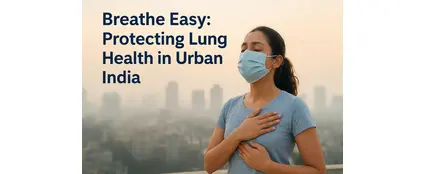
Tuberculosis
Tuberculosis or TB is a potentially severe contagious condition that involves your lungs commonly among other organs getting infected by a type of bacteria known as Mycobacterium tuberculosis.
At BLK Max Hospital, Delhi, our Centre for Chest & Respiratory Diseases specializes in the diagnosis, treatment, and prevention of all forms of tuberculosis. With a multidisciplinary team of pulmonologists, infectious disease experts, and critical care specialists, we provide advanced, evidence-based care designed for complete recovery and improved quality of life.
Alternative Names of Tuberculosis
Phthisis, Tabes, Schachepheth, White plague, or Consumptions.
Associated Anatomy of TB
Lungs (primarily affected organs), lymph nodes, pleura, liver, brain, spine, joints, kidneys, etc.
Types of Tuberculosis
You may not necessarily get sick if TB bacteria infect you. Accordingly, the types of TB are:
1. Pulmonary Tuberculosis
This is the most common form of TB, affecting the lungs. It can cause persistent coughing, chest pain, and difficulty in breathing. Pulmonary TB is contagious and spreads through respiratory droplets.
2. Extrapulmonary Tuberculosis
In this form, the infection occurs outside the lungs, often in organs such as the kidneys, spine, lymph nodes, or brain. Common types include:
Skeletal TB – affects the bones and joints, especially the spine (Pott’s disease).
Lymph node TB – causes swelling of the lymph glands.
Meningeal TB – involves the membranes covering the brain and spinal cord.
Abdominal TB – affects the intestines or other abdominal organs.
3. Latent Tuberculosis
The bacteria remain inactive within the body and cause no symptoms. However, if the immune system becomes compromised, latent TB can progress to active TB.
4. Drug-resistant Tuberculosis (DR-TB)
When the bacteria no longer respond to standard anti-TB medications, it is termed drug-resistant TB. This type requires specialized treatment regimens and longer therapy durations under expert medical supervision.
Causes of Tuberculosis
A bacteria called Mycobacterium tuberculosis infects a person's lungs and spreads from one person to another via tiny droplets diffused into the air when the infected person sneezes, coughs, or speaks. You are likely to get TB if you contact a person who has it or if you have immunocompromised conditions like HIV.
Symptoms of Tuberculosis
The symptoms of TB depend on whether it is active or latent, and which part of the body is affected.
Common symptoms of active pulmonary TB include:
Cough that lasts for a duration longer than three weeks
Fever
Weight loss
Loss of appetite
Blood in the cough
Weakness
Chest pains and shortness of breath
Chills
Night sweats
Back pain (due to spine TB)
Blood in the urine (due to kidney TB)
Symptoms of extrapulmonary TB vary based on the affected organ. For instance, spinal TB may cause back pain, while kidney TB can lead to blood in urine.
If you experience any of these symptoms, consult a doctor immediately for evaluation and testing.
Tuberculosis Stages
Three stages characterise TB infection:
Stage I - Exposure: When a person is exposed to a person having TB (negative skin test and normal X-ray).
Stage II - Latent TB Infection: A person doesn't actually have symptoms, despite having bacteria in their body (positive skin test but negative x-ray).
Stage III - TB Disease: An individual shows all signs and symptoms with positive skin and chest x-ray.
Tuberculosis Diagnosis
To diagnose TB, a doctor will first conduct a physical exam to look for inflamed lymph nodes or patches in lungs. A blood test may also be required, wherein TB proteins are added to your blood sample to check your immune response, for countries with low prevalence of TB. In addition, sputum or acid-fast bacillus (AFB) tests are used to identify TB bacteria in your system.
Common diagnostic tests include:
Tuberculin Skin Test (Mantoux Test)
Interferon-Gamma Release Assays (IGRAs)
Chest X-ray / CT Scan
Sputum Smear Microscopy & Culture
GeneXpert / CBNAAT Test
Biopsy / FNAC
Differential Diagnosis of Tuberculosis
The common differential diagnosis of TB includes:
Bacterial pneumonia
Bronchogenic carcinoma
Brucellosis
Hodgkin lymphoma
Sarcoidosis
Mycoplasmal pneumonia
Blastomycosis
Tularemia
Actinomycosis
Tuberculous lymphadenitis
Skeletal tuberculosis
Tuberculosis peritonitis
Tuberculosis Treatment
1. Treatment for Latent TB
Latent TB treatment involves medications (either alone or in a combination of isoniazid, rifapentine, or rifampin) to prevent TB from becoming an active disease. You may be on these medications for around nine months.
2. Treatment for Active TB
Active TB is curable and can be treated with the standard six-month course of four antimicrobial drugs (ethambutol, isoniazid, pyrazinamide, and rifampin) combined under the guidance of a health practitioner.
3. Treatment for Drug-Resistant TB
Drug-resistant TB requires one or several other medicines to be taken for a longer duration, around twenty four months.
4. Supportive and Adjunctive Care
In addition to antibiotics, supportive care may include:
Nutritional support to boost immunity
Respiratory therapy and pulmonary rehabilitation
Management of coexisting conditions (e.g., HIV, diabetes)
Surgical intervention in severe or localized TB cases
Risk Associated with Tuberculosis
Your chances of acquiring TB infection increase if:
Your family member, friend, or colleague has active TB.
If you live in places where TB is prevalent.
If you travel to areas where TB is relatively common (Russia, Latin America, Asia, or Africa).
You live in or work in a hospital, prison, or people with HIV.
If you have a weakened immune system.
If you have HIV or AIDS, kidney disease, or diabetes.
If you are on medications for organ transplant or undergoing chemotherapy.
You are a smoker.
Possible Complications of Tuberculosis
Severe TB is associated with complications like lung and joint damage. It also involves infection in your spinal cord, bones, brain, lymph nodes, liver, or kidney. Additionally, patients may experience back pain and stiffness. Fluid collection and inflammation of the tissues near your heart may lead to cardiac tamponade. Infections and inflammation near the brain may cause meningitis. In conditions like HIV, which weaken your immune system, your body cannot control TB bacteria, thereby deteriorating your condition. Untreated TB can be fatal.
Tuberculosis Prevention
You may be able to help prevent the spread of TB by taking these precautions:
Vaccination
Taking all medicines meticulously, despite having a latent infection.
Limiting your contact with people if you have TB.
Use a surgical mask while sneezing or coughing.
Avoid travelling to areas where TB is more prevalent.
Get kids vaccinated with the BCG vaccine.
Why Choose BLK Max Hospital for Tuberculosis Treatment in Delhi
At BLK Max Hospital, we combine advanced diagnostics, personalized treatment, and compassionate care to deliver the best possible outcomes for TB patients. Our Centre for Chest & Respiratory Diseases is equipped with:
A team of experienced pulmonologists, infectious disease experts, and critical care specialists
State-of-the-art diagnostic technology, including CBNAAT and advanced imaging
Comprehensive management for both drug-sensitive and drug-resistant TB
Multidisciplinary support, including dietitians, physiotherapists, and counselors
Infection control measures in line with national and international TB management protocols
Our goal is to not just cure TB but to help patients regain their strength, confidence, and overall well-being.
Epidemiology of TB
TB stands as the 13th leading cause of death and the 2nd leading infectious killer among the infectious diseases. In the year 2020, up to 1.5 million people lost their lives due to TB (including 2,14,000 people with HIV).
Around ten million people get infected with TB every year; affected people comprise about 5.6 million men, approximately 3.3 million women, and nearly 1.1 million children.
TB is commonly found in countries of India, China, the Philippines, Pakistan, Nigeria, Indonesia, Bangladesh, and South Africa.
The good news is the incidence of TB is decreasing by about 2% per year, and the cumulative reduction between 2015 and 2020 is by 11%.
Expected Prognosis of TB
TB is categorised as a curable disease. Once diagnosed, TB can be cured with a practical, adequate, and appropriate treatment plan. The prognosis of TB depends on several things like your overall health, the severity of infection, and how diligently you follow doctors' directions on treatment. However, the prognosis may be poor for senior citizens or people with serious medical conditions.
Natural Progression of TB
The progression of TB from the state of infection to the fully-developed illness involves overcoming your immune system's defences against TB bacteria. As these bacteria start to multiply, they target your immune system, causing active TB. The bacteria can further spread via blood from the lungs to the kidney, spine, or brain, eventually damaging the other tissues and organs of the body.
Pathophysiology of TB
The TB bacteria settle and multiply in the lung's alveoli. Alveolar macrophages destroy the majority of the bacteria. However, some may multiply intracellularly and are released when the macrophages die. Although TB in the lungs is infectious, TB allied with other body parts is usually not infectious.
Frequently Asked Questions
1. What is TB in females?
TB in females is a bacterial lung infection. It can also affect other parts. Early detection and treatment are crucial for a full recovery.
2. Which food avoids TB?
A balanced diet rich in nutrients like fruits, vegetables, and proteins can help strengthen the immune system and aid in TB prevention.
3. Is TB a very serious disease?
TB is a serious disease requiring prompt treatment. With medical care and adherence, most people can fully recover and lead healthy lives.
4. Is TB a painful disease?
TB can cause chest pain and discomfort, but it's not primarily a painful disease. Treatment focuses on alleviating symptoms and curing the infection.
5. What is the recovery rate for TB?
The recovery rate for TB varies based on factors like timely treatment and overall health. With proper medical attention, many patients achieve complete recovery.
Related Blogs
Tuberculosis of Lymph Nodes: Is It Curable?
Harmful Effects Of Tobacco
Breathing Difficulty Symptoms & Causes
Hemoptysis (Coughing Up Blood): Causes, Symptoms, and Treatment Options
Know More
 +91 954 002 5025 (24/7)