 +91 954 002 5025 (24/7)


To Book an Appointment
Call Us+91 954 002 5025To Book an Appointment
Call Us+91 954 002 5025Constituents of a Healthy Diet: Essential Nutrients Your Body Needs Every Day
By Medical Expert Team
Dec 21 , 2022 | 9 min read

A healthy diet is an eating pattern that provides all essential nutrients, adequate energy, and sufficient fluids to support normal growth, daily activities, and long‑term health while reducing the risk of non‑communicable diseases such as heart disease and diabetes [1],[2].
It typically includes a variety of vegetables, fruits, whole grains, adequate protein, and healthy fats, and limits excess added sugars, salt, and highly processed foods [1],[3].
The exact diet pattern varies by age, sex, health status, and cultural preferences, but the core building blocks of a healthy diet remain broadly similar for most healthy adults [1].
This article provides general information about key components of a healthy diet and is not a substitute for personalized medical or nutrition advice. For specific health conditions, please consult your doctor or a registered dietitian.
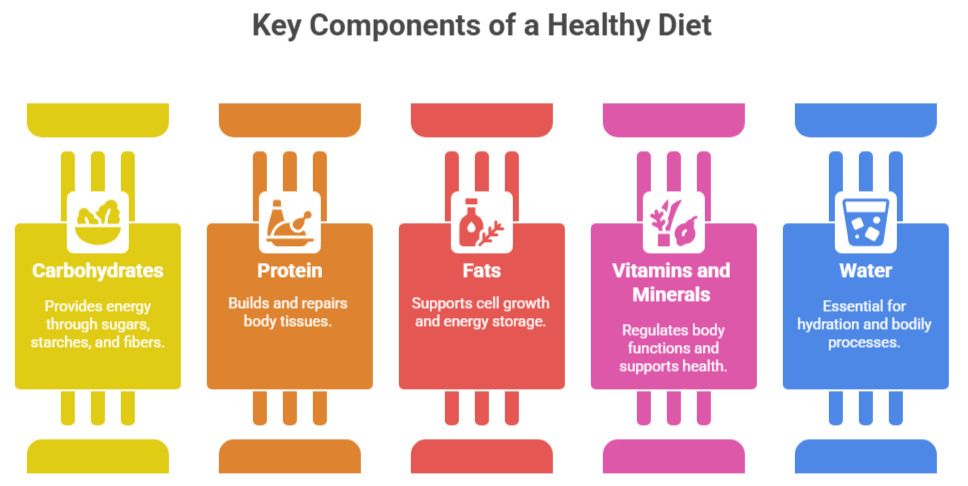
What Are the Key Components of a Healthy Diet?
The main constituents of a healthy diet are carbohydrates, proteins, fats, vitamins and minerals, and water, each of which plays a distinct role in supporting body functions [1],[2].
1. Carbohydrates
Lately, low‑carb diets have been popular, creating a misconception that all carbohydrates are bad. In reality, carbohydrates are the body’s primary source of energy, especially for the brain and active muscles, and can be part of a healthy diet when their quality and quantity are appropriate [1],[4].
Health authorities generally recommend that, for most adults, carbohydrates provide roughly 45–65% of total daily energy intake, with an emphasis on whole, minimally processed sources [4].
Types of Carbohydrates
- Sugars
Sugar is the simplest form of carbohydrate and occurs naturally in fruits, some vegetables, and milk and milk products. Natural sources of sugar (such as whole fruits and plain milk) also provide vitamins, minerals, and other beneficial compounds, whereas foods and drinks with added sugars (such as biscuits, cakes, desserts, and sugary beverages) mainly add extra calories with little nutritional value [1],[5].
High intake of added sugars, especially from sugar‑sweetened beverages, is associated with weight gain, increased risk of type 2 diabetes, and cardiovascular disease when consumed regularly over time [5],[6]. - Starch
Starches are complex carbohydrates found in foods like whole grains, potatoes, legumes, and some vegetables. They provide energy along with fibre, B‑vitamins, and minerals, particularly when consumed in whole or minimally processed forms [1],[4].
People often think starchy foods automatically cause weight gain, but it is usually the added fats, sugars, and large portion sizes that contribute to excess calories, not the starch itself [4]. - Fibre
Fibre is a type of carbohydrate that the body cannot fully digest, yet it is essential for digestive and metabolic health. Adequate dietary fibre helps regulate bowel movements, supports gut health, slows the absorption of sugars, and can help improve blood cholesterol levels [2],[7].
Dietary guidelines typically recommend around 25–30 g of fibre per day for adults, mainly from vegetables, fruits, whole grains, pulses, nuts, and seeds [2],[7].
Read more about – High Cholesterol Symptoms, Causes & Prevention and How a Dietitian Chart Can Help You Manage Your Diet and Achieve Your Health Goals.
2. Protein
Protein is often called the building block of the body. It is required for the growth, repair, and maintenance of muscles and tissues, for making enzymes and hormones, and for supporting immune function [1],[8].
Common animal‑based sources of protein include eggs, poultry, meat, and fish. These usually provide all essential amino acids in adequate amounts and are considered “complete” proteins [8].
Plant‑based proteins such as lentils, beans, chickpeas, soy, nuts, and seeds are also excellent options. Combining different plant protein sources across the day (for example, cereals with pulses) can help ensure you obtain all essential amino acids, especially in vegetarian or vegan diets [8].
3. Fats
Another common misconception is that all fats are harmful. Fats are essential for absorbing fat‑soluble vitamins (A, D, E, K), supporting cell structure, hormone production, and providing concentrated energy [1],[9].
Unsaturated fats, especially those from plant oils (such as olive, mustard, sunflower, and soybean oils), nuts, seeds, and fatty fish, are associated with better heart health when they replace saturated and trans fats in the diet [9],[10].
Sources of healthy fats include olive, sunflower, soy, and corn oils, as well as seeds, nuts, and fish like salmon and tuna. Limiting saturated fats (found in ghee, butter, high‑fat meats) and avoiding industrial trans fats (often present in partially hydrogenated oils and some baked or fried foods) is recommended to reduce cardiovascular risk [9],[10].
4. Vitamins and Minerals
These are essential micronutrients that the body needs in small amounts for a wide range of functions. Vitamins support processes such as vision, immunity, and energy metabolism, while minerals such as calcium, iron, zinc, and potassium are important for bone health, oxygen transport, nerve function, and fluid balance [1],[2].
Vitamins are organic and can be affected by heat, air, or light, whereas minerals are inorganic and more stable. Overcooking vegetables (especially in large amounts of water) can reduce the content of some heat‑sensitive and water‑soluble vitamins such as vitamin C and certain B‑vitamins [11].
Sources of vitamins and minerals include dairy foods, vegetable oils, oily fish, fruits and vegetables, milk and milk products, nuts, seeds, and whole grains. A colourful variety of plant foods, combined with appropriate amounts of animal‑ or plant‑based proteins, helps most healthy adults meet their micronutrient needs [1],[2].
Explore the expert guide – Best & Worst Foods for Liver Health and What Does the Liver Do & Tips to Keep It Healthy.
5. Water
Approximately 60% of an adult’s body weight is water; hence adequate hydration is crucial. Water helps regulate body temperature, supports digestion, transports nutrients, and removes waste products through urine, sweat, and stools [12].
Daily fluid needs vary by age, climate, physical activity, and health status, but many guidelines suggest around 2–3 litres (about 8–12 glasses) of total fluids per day for most healthy adults, including water from beverages and foods, unless your doctor advises otherwise [12],[13].
Simple strategies such as keeping a filled water bottle nearby, drinking regularly through the day, and choosing water over sugary drinks can help you stay hydrated [12].
There is a myth that taking water during or after meals weakens gastric juices and affects digestion. Evidence does not support this myth; moderate water intake with meals can actually aid swallowing and digestion for most people [12].
Know more about – DASH Diet Plan, Keto diet, Keto vs. Mediterranean Diet: Benefits & Meal Plan, and Whole grains diet.
Which Food Constituent Is Needed in Maximum Amount in a Daily Diet?
Among the major components of a healthy diet, carbohydrates generally make up the largest proportion of daily energy intake for most people, followed by fats and proteins [1],[4].
However, the ideal distribution depends on age, activity level, metabolic health, and medical conditions, so maintaining an overall balance of all nutrients is more important than focusing on a single component [4],[8].
What Should a Healthy Plate Look Like?
A balanced plate is a simple visual tool to plan meals. For most healthy adults, a good starting point is: half the plate filled with vegetables and fruits, one‑quarter with whole grains, and one‑quarter with protein‑rich foods, plus a small amount of healthy oils [1],[3].
Your plate can be planned as:
- Vegetables and fruits – about ½ plate, focusing on different colours and types [1],[3].
- Whole grains – about ¼ plate, such as whole wheat, brown rice, millets, oats, or other minimally processed grains [1],[3].
- Protein – about ¼ plate, including pulses, beans, soy products, eggs, fish, or lean meat depending on your dietary pattern [1],[8].
- Healthy oils – used in small amounts for cooking or dressings, choosing predominantly unsaturated oils [9],[10].
Limiting salt, added sugars, deep‑fried items, and ultra‑processed foods is also important for long‑term health [1],[3],[5].
Need a Personalized Diet Plan?
If you want a customised diet chart, consult our dieticians now. A registered dietitian or qualified nutrition professional can assess your medical history, lifestyle, and laboratory parameters to design an individualized plan, especially if you have conditions such as diabetes, heart disease, kidney disease, or liver disease [2],[8].
Learn more about – How Diabetes Affects Your Kidneys and Dietary Changes You Can Make To Improve Your Kidney Health.
Disclaimer: This article is intended for general educational purposes only and does not replace professional medical advice, diagnosis, or treatment. Always consult your doctor or a qualified healthcare professional for personalised recommendations, especially if you have any existing medical conditions, are pregnant, or are on regular medications.
Frequently Asked Questions
Q1: What are the main components of a healthy diet?
A healthy diet includes carbohydrates, proteins, fats, vitamins, minerals, and adequate water, all in balanced proportions to support health and prevent disease.
Q2: Are carbohydrates bad for you?
No, carbohydrates are the body's primary energy source. Choosing whole grains, fruits, and vegetables as carbs is healthy, while limiting added sugars is important.
Learn more about – Sugar: The Sweet But Silent Killer.
Q3: What are healthy fats and why are they important?
Healthy fats include unsaturated fats from sources like olive oil, nuts, and fish. They support heart health, hormone balance, and inflammation control.
Q4: How much water should I drink daily?
Hydration needs vary, but most adults require about 2 to 3 liters (8–12 cups) of water daily to support bodily functions.
Q5: What does a balanced plate look like?
Half your plate should be vegetables and fruits, one-quarter whole grains, and one-quarter protein, with healthy oils in moderation.
Q6: Is this information a substitute for medical advice?
No, please consult a healthcare professional for personalized dietary advice or treatment of health conditions.
References
[1] World Health Organization. (2020). Healthy diet. https://www.who.int/news-room/fact-sheets/detail/healthy-diet
[2] World Health Organization. (2023). WHO guideline: Healthy diet. https://www.who.int/publications
[3] Harvard T.H. Chan School of Public Health. (n.d.). Healthy eating plate & healthy eating pyramid. https://www.hsph.harvard.edu/nutritionsource/healthy-eating-plate
[4] U.S. Department of Health and Human Services & U.S. Department of Agriculture. (2020). Dietary Guidelines for Americans, 2020–2025 (9th ed.). https://www.dietaryguidelines.gov
[5] World Health Organization. (2015). Guideline: Sugars intake for adults and children. World Health Organization.
[6] Malik, V. S., Popkin, B. M., Bray, G. A., Després, J.-P., Willett, W. C., & Hu, F. B. (2010). Sugar-sweetened beverages and risk of metabolic syndrome and type 2 diabetes: A meta-analysis. Diabetes Care, 33(11), 2477–2483. https://doi.org/10.2337/dc10-1079
[7] Reynolds, A., Mann, J., Cummings, J., Winter, N., Mete, E., & Te Morenga, L. (2019). Carbohydrate quality and human health: A series of systematic reviews and meta-analyses. The Lancet, 393(10170), 434–445. https://doi.org/10.1016/S0140-6736(18)31809-9
[8] National Institutes of Health. (2021). Protein: Overview. https://ods.od.nih.gov
[9] World Health Organization. (2018). Healthy diet: Key facts about fats. https://www.who.int/news-room/fact-sheets/detail/healthy-diet
[10] Mensink, R. P. (2016). Effects of saturated fatty acids on serum lipids and lipoproteins: A systematic review and regression analysis. World Health Organization.
[11] Bernhardt, S., & Schlich, E. (2006). Impact of different cooking methods on food quality: Retention of lipophilic vitamins in fresh and frozen vegetables. Journal of Food Engineering, 77(2), 327–333. https://doi.org/10.1016/j.jfoodeng.2005.06.040
[12] Popkin, B. M., D’Anci, K. E., & Rosenberg, I. H. (2010). Water, hydration, and health. Nutrition Reviews, 68(8), 439–458. https://doi.org/10.1111/j.1753-4887.2010.00304.x
[13] European Food Safety Authority. (2010). Scientific opinion on dietary reference values for water. EFSA Journal, 8(3), 1459. https://doi.org/10.2903/j.efsa.2010.1459

Related Blogs


Medical Expert Team
Aug 08 , 2022 | 5 min read

Blogs by Doctor


Heat Stroke Prevention Measures: How to Stay Safe in Extreme Heat
Medical Expert Team
Jul 18 , 2019 | 3 min read
Most read Blogs


Related Blogs
Medical Expert Team
Aug 08 , 2022 | 5 min read
Blogs by Doctor
Heat Stroke Prevention Measures: How to Stay Safe in Extreme Heat
Medical Expert Team
Jul 18 , 2019 | 3 min read
Most read Blogs
