 +91 954 002 5025 (24/7)

To Book an Appointment
Call Us+91 954 002 5025To Book an Appointment
Call Us+91 954 002 5025What is a DASH Diet? A Complete Guide to Healthy Eating
By Dr. Rajinder Kumar Singal in Internal Medicine
Sep 29 , 2025 | 8 min read

DASH diet stands for Dietary Approaches to Stop Hypertension. It was created to help people manage high blood pressure, without relying on excessive medication. But over the years, it has also become popular for overall healthy eating and weight control.
This article will break down what the DASH Diet is, how it works, what foods it includes, the benefits you can expect, and how to start it at home without making life difficult.
Understanding DASH Diet
What is a DASH Diet?
DASH (Dietary Approaches to Stop Hypertension) diet is a balanced approach to eating that helps people lower high blood pressure by emphasizing fruits, vegetables, whole grains, lean protein, and low-fat dairy, while limiting sodium, saturated fat, and sweets. It’s not extreme and it doesn’t ask you to skip entire food groups or count every calorie. Instead, it’s about choosing the right types of food more often.
The main idea is to eat whole foods rich in potassium, calcium, magnesium, and fiber, and to reduce sodium (salt). You get these nutrients from simple things like bananas, dal, milk, curd, and vegetables.
Read more about- 7 Myths About Hypertension & Facts and How a Dietitian Chart Can Help You Manage Your Diet and Achieve Your Health Goals.
Core Principles of DASH Diet
Here’s what the DASH Diet is built around:
- Less salt: Keep your daily sodium below 2,300 mg i.e. about 1 teaspoon.
- More potassium: Found in bananas, spinach, beans, and potatoes.
- Whole grains: Brown rice, oats, wheat roti.
- Lean protein: Eggs, chicken breast, fish, dals, rajma, chana.
- Low-fat dairy: Milk, paneer, curd, but not too creamy.
- Fewer processed items: Reduce chips, ready-to-eat foods, fried snacks.
- Healthy fats: Use a small amount of mustard oil, olive oil, or groundnut oil.
The goal is to eat clean and balanced meals, while reducing the consumption of extra salt, oil, and sugar.
Health Benefits of DASH Diet
Managing High Blood Pressure
One of the biggest benefits of the DASH Diet is that it helps lower blood pressure. That’s what it was designed for. Reducing salt intake and increasing potassium-rich foods can help balance fluid levels in the body and lower pressure on your heart.
Studies have shown that this diet can lower both systolic and diastolic readings in people with or without hypertension. If you stick to it, you might be able to reduce your medicine over time (under doctor’s guidance, of course).
Promoting Heart Health
The DASH diet also helps in improving heart health. It reduces the risk of heart attacks, stroke, and cholesterol problems. Since it avoids unhealthy fats and processed foods, your cholesterol stays in check, and your heart doesn’t have to work overtime.
Eating more fibre from fruits, lean proteins, and nuts helps keep your arteries clean. It’s not a miracle, but it works steadily over time.
Explore the - Foods That Boost Heart Health: What to Eat & Avoid.
Supporting Weight Loss
The DASH Diet isn’t made for weight loss, but it often helps you shed extra kilos, because it’s full of nutrient-dense, low-calorie foods. When you eat more vegetables, dal, roti, and fruits, you stay full without eating junk.
It also helps you become more aware of portion sizes and avoid over-snacking on fried or sugary items. That’s what makes it easier to follow long term.
Know more about - Diet Chart for Weight Loss for Female & Male | Best Plan, Keto Diet for Weight Loss: Burn Fat Fast Without Hunger, and Keto vs. Mediterranean Diet: Benefits & Meal Plan.
Key Components of DASH Diet
What to Eat
You don’t have to eat fancy or imported food. Regular Indian meals can easily fit into the DASH Diet. Here’s what you should eat more of:
- Vegetables: Bhindi, lauki, palak, tinda, beans
- Fruits: Banana, apple, papaya, guava
- Whole grains: Brown rice, multigrain roti, oats, daliya
- Low-fat dairy: Toned milk, curd, paneer (in moderation)
- Lean proteins: Dal, egg whites, grilled chicken, fish curry, chana, rajma
- Nuts and seeds: A handful of almonds, walnuts, flaxseeds
These foods provide your body with the essential minerals and nutrients it needs, without excessive amounts of salt, oil, or sugar.
Learn more about - Key Components of a Healthy Diet & Their Daily Importance.
Foods to Limit or Avoid
Now here’s what you should cut down on. You don’t have to ban them completely, just reduce them slowly.
- Salty packaged food: Chips, ready-to-eat mixes, soups
- Added sugars: Sweets, pastries, sweetened drinks
- Saturated fats: Ghee-loaded parathas, fried snacks, mutton curry with fat
Importance of Sodium Reduction
Sodium, or salt, plays a significant role in the issue of blood pressure. Most of us don’t realise how much we’re having. Not just from the salt we add while cooking, but also from pickles, papads, chutneys, and biscuits.
To manage this:
- Cook with less salt, use spices for flavour.
- Taste food before adding extra salt at the table.
- Skip processed snacks or opt for the low-sodium version.
- Drink plain water instead of packaged juices or colas.
It takes a few weeks to adjust to your new taste, but once you do, you’ll notice that you no longer crave that extra salt.
How to Start DASH Diet
Step-by-Step Guide to Transitioning to the DASH Diet
Starting the DASH Diet doesn't mean you have to change everything overnight. You can make small changes, one step at a time. First, try adding more vegetables to your meals. Instead of only rice and dal, add a bowl of mixed sabzi. Then slowly reduce the amount of salt you use while cooking.
Next, when shopping, check the labels and look for foods with low sodium content. Choose plain oats instead of flavoured ones, or curd without added sugar. You can also replace white rice with brown rice a few times a week. The goal is to build new habits gradually, rather than feeling punished.
Create a simple list before heading to the grocery store. Include fruits, vegetables, dals, toned milk, and lean protein like fish or egg whites. Planning helps avoid unhealthy impulse buys.
Sample DASH Diet Meal Plan
Here’s a simple 3-day Indian meal plan you can follow. It includes both veg and non-veg options to suit different preferences.
Day 1
- Breakfast: Oats porridge with banana slices and unsweetened tea
- Lunch: Brown rice, moong dal, bhindi sabzi, cucumber salad
- Snack: Roasted chana or 5 almonds
- Dinner: Multigrain roti, grilled fish or paneer bhurji, sautéed spinach
Day 2
- Breakfast: Vegetable poha with peanuts, apple
- Lunch: Roti, arhar dal, mixed veg curry
- Snack: Buttermilk (chhachh)
- Dinner: Steamed rice, rajma, stir-fried beans, carrot sticks
Day 3
- Breakfast: Boiled eggs (or besan chilla), a small bowl of papaya
- Lunch: Bajra roti, curd, lauki curry
- Snack: Sprouts chaat with lemon
- Dinner: Grilled chicken or tofu, dal soup, salad
Day 4
- Breakfast: Nonfat plain Greek yogurt, cup raspberries, walnuts, chopped, honey
- Lunch: White Bean & Avocado Toast, mixed greens, cucumber slices, grated carrot, Vinaigrette
- Snack: Plum
- Dinner: Stuffed Sweet Potato with Hummus Dressing
Day 5
- Breakfast: Peanut Butter-Banana Cinnamon Toast, clementines
- Lunch: Green Salad with Pita Bread & Hummus
- Snack: Grapes
- Dinner: Chicken Chili with Sweet Potatoes, avocado, diced, nonfat plain Greek yogurt
Day 6
- Breakfast: Fig & Honey Yogurt, raspberries
- Lunch: Wheat pita, low-sodium deli turkey, pear, sliced, shredded Cheddar cheese, mixed greens
- Snack: Plum, walnuts halves
- Dinner: Lemon-Garlic Shrimp over Orzo with Zucchini, Chocolate & Nut Butter Bites
Day 7
- Breakfast: Wheat bread, toasted, egg, olive oil, pico de gallo or salsa, banana
- Lunch: Chicken Chili with Sweet Potatoes
- Snack: Raspberries
- Dinner: Creamy Fettuccine with Brussels Sprouts & Mushrooms, dark chocolate
These are just examples. You can mix and match based on what’s available at home.
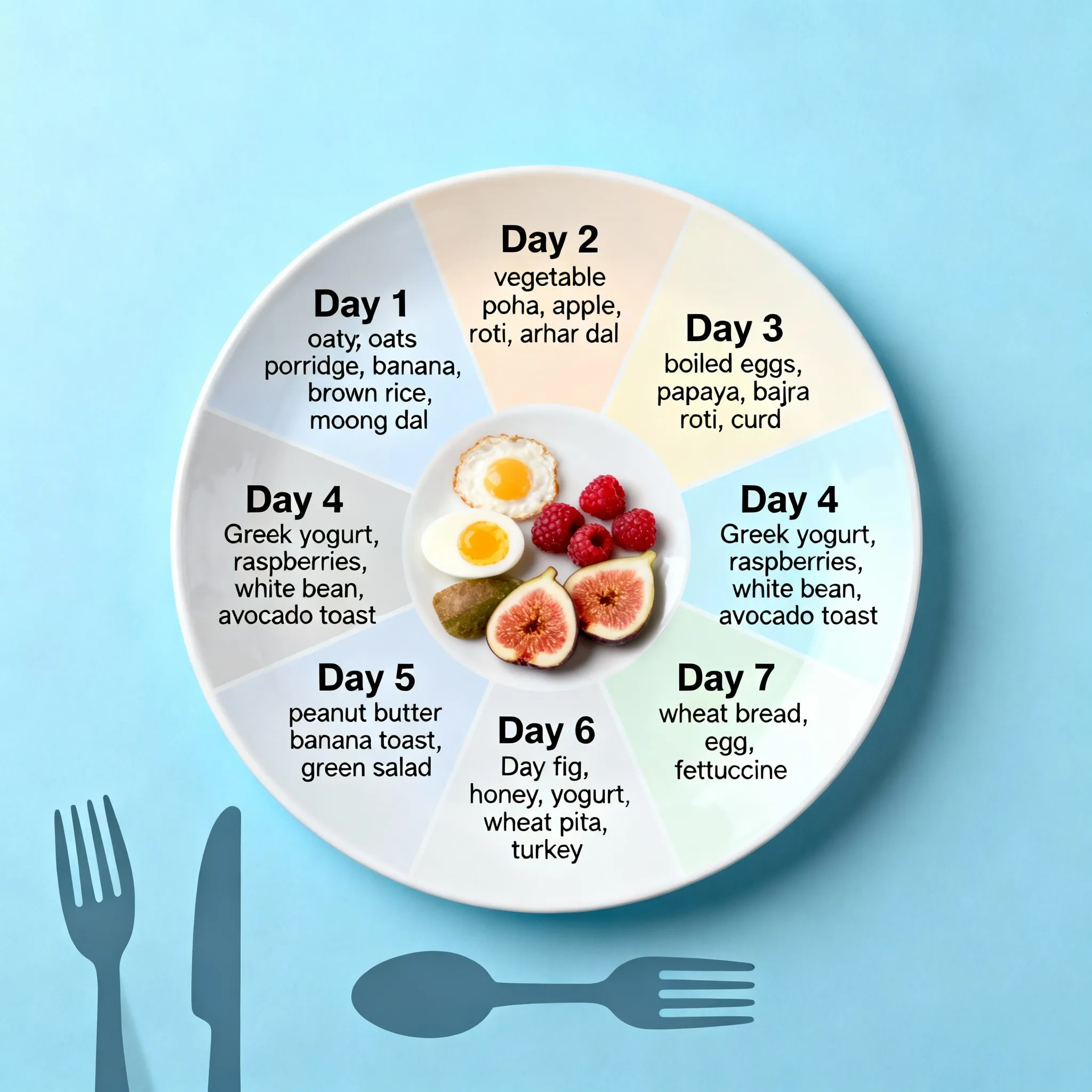
7-Day Dash Diet Chart with Food Quantities & Calories
| Days | Breakfast | Lunch | Evening Snack | Dinner | Daily Total |
| Day 1 | Oats porridge with banana, tea (300 calories) | Brown rice, moong dal, bhindi, salad (450 calories) | Roasted chana or 5 almonds (100 calories) | Multigrain roti, grilled fish/paneer, spinach (500 calories) | 1350 calories |
| Day 2 | Veg poha + apple (350 calories) | Roti, arhar dal, mixed veg curry (450 calories) | Buttermilk (80 calories) | Steamed rice, rajma, beans, carrot (500 calories) | 1380 calories |
| Day 3 | Eggs/besan chilla + papaya (320 calories) | Bajra roti, curd, lauki curry (400 calories) | Sprouts chaat (150 calories) | Grilled chicken/tofu, dal soup, salad (500 calories) | 1370 calories |
| Day 4 | Greek yogurt, raspberries, walnuts, honey (350 calories) | White bean & avocado toast + greens (400 calories) | Plum (80 calories) | Stuffed sweet potato with hummus (450 calories) | 1280 calories |
| Day 5 | Peanut butter-banana toast, clementines (350 calories) | Green salad with pita & hummus (400 calories) | Grapes (100 calories) | Chicken chili, avocado, yogurt (500 calories) | 1350 calories |
| Day 6 | Fig & honey yogurt, raspberries (320 calories) | Pita with turkey, pear, cheddar, greens (450 calories) | Plum + walnuts (180 calories) | Lemon-garlic shrimp over orzo, choc/nut bites (520 calories) | 1470 calories |
| Day 7 | Toasted wheat bread with egg, salsa, banana (350 calories) | Chicken chili with sweet potatoes (450 calories) | Raspberries (80 calories) | Creamy fettuccine with sprouts & mushrooms, dark chocolate (550 calories) | 1430 calories |
Portion Control and Balanced Eating
Eating healthy also means watching how much you eat. DASH Diet works best when you use balanced portions. Don’t overload on carbs like rice or roti. Keep a mix of protein, fibre, and good fats in each meal.
A good rule of thumb is to divide your plate into thirds: half vegetables, one-quarter whole grains, and one-quarter protein. And for snacks, try options like roasted peanuts, a fruit, or low-fat curd instead of chips or sweets.
Conclusion
DASH Diet is one of the easiest and most balanced diets you can follow for better health. It helps control blood pressure, supports heart health, and encourages sustainable weight loss, all without needing fancy meals or expensive ingredients.
At BLK-Max Super Speciality Hospital, we always encourage our patients to take practical steps for long-term health. If you're thinking about starting the Dash Diet or want personal advice for your health goals, we’re here to help.
Frequently Asked Questions
1. Is the DASH Diet suitable for people with diabetes?
Yes, the DASH Diet can be beneficial for people with type 2 diabetes, because it emphasizes whole grains, vegetables, lean proteins, and reduced sugar intake, which help in stabilizing blood sugar levels.
2. Can vegetarians and vegans follow the DASH Diet?
Absolutely. The DASH Diet is flexible and can be adapted for vegetarians and vegans by focusing on plant-based proteins such as beans, lentils, tofu, nuts, and seeds, instead of animal proteins.
3. Are there any side effects of the DASH Diet?
Generally, it’s considered very safe. However, some people may initially experience bloating or stomach discomfort due to a sudden increase in fiber-rich foods. Adjusting gradually can help.
4. Is DASH Diet a long-term lifestyle or just a short-term plan?
DASH Diet is designed as a sustainable lifestyle rather than a temporary diet. It can be followed long-term to support heart health, blood pressure, and overall wellness.

Written and Verified by:

Related Blogs

Medical Expert Team
Jul 18 , 2019 | 3 min read


Medical Expert Team
Dec 27 , 2021 | 3 min read
Blogs by Doctor

Diet For Typhoid Fever: Foods To Eat And Avoid for Fast Recover
Dr. Rajinder Kumar Singal In Internal Medicine
Apr 25 , 2022 | 8 min read

Understanding Malaria: Causes, Symptoms, and Prevention
Dr. Rajinder Kumar Singal In Internal Medicine
Oct 30 , 2023 | 5 min read

Typhoid Fever Symptoms, Causes and Stages: Everything You Need to Know
Dr. Rajinder Kumar Singal In Internal Medicine
Nov 27 , 2023 | 7 min read
Most read Blogs


Related Blogs
Medical Expert Team
Jul 18 , 2019 | 3 min read
Medical Expert Team
Dec 27 , 2021 | 3 min read
Blogs by Doctor
Diet For Typhoid Fever: Foods To Eat And Avoid for Fast Recover
Dr. Rajinder Kumar Singal In Internal Medicine
Apr 25 , 2022 | 8 min read
Understanding Malaria: Causes, Symptoms, and Prevention
Dr. Rajinder Kumar Singal In Internal Medicine
Oct 30 , 2023 | 5 min read
Typhoid Fever Symptoms, Causes and Stages: Everything You Need to Know
Dr. Rajinder Kumar Singal In Internal Medicine
Nov 27 , 2023 | 7 min read
Most read Blogs
