 +91 954 002 5025 (24/7)

To Book an Appointment
Call Us+91 954 002 5025To Book an Appointment
Call Us+91 954 002 5025Joint Pain in Winter: Why It Happens and How to Manage It?
By Dr. Rakesh Mahajan in Institute For Bone, Joint Replacement, Orthopedics Spine & Sports Medicine
Apr 21 , 2025 | 5 min read

If you feel that joint pain worsens over the cold months, you are not alone; many people feel it more during the winter. The pain impacts people who have arthritis, older people, and individuals with sore joints.
In this blog, we'll cover what causes joint pain, its symptoms, treatments, and preventions so you have a comprehensive view of the problem and practical tips for a better life.
Why Does Joint Pain Worsen in Winter?
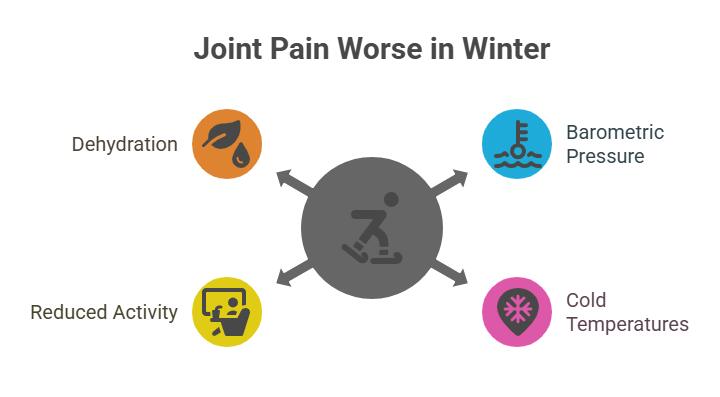
1. Barometric Pressure Changes
When barometric pressure is low, tissues around your joints expand slightly. This expansion might cause swelling or inflammation. Thus, you could feel a little more stiff or sore when the pressure is low, like in the winter season.
2. Cold Temperatures
In colder weather, blood flow to your extremities can decrease. Reduced circulation usually leads to the tightening of the muscles, putting extra strain on the joints. This tightening of the muscles in the knees could make bending, walking up the stairs, etc., a little difficult.
3. Reduced Physical Activity
Winter tends to keep people indoors and less active. Inactivity can weaken the muscles that support your joints. Weaker muscles mean less stability for knees, hips, and other joints, leading to more discomfort when you do move.
4. Dehydration in Winter
You may not feel as thirsty when the weather is cold, because the air is often drier in the winter. Dryness can cause mild dehydration that impacts the fluid cushioning for your joints. When your joints do not receive adequate lubrication, you are likely to feel more pain and stiffness.
Recognising Joint Pain Symptoms
It’s important to identify when your discomfort goes beyond usual aches. Extreme joint issues often include:
- Morning Stiffness and Swelling: Feeling tight or puffy joints after waking up.
- Increased Discomfort in Knees, Hips, or Hands: These areas are particularly vulnerable to temperature changes.
- Pain Aggravated by Inactivity or Cold Exposure: Taking a break from physical movement or stepping outside on a chilly day might make the pain worse once you move again.
Tips to Manage Joint Pain in Winter
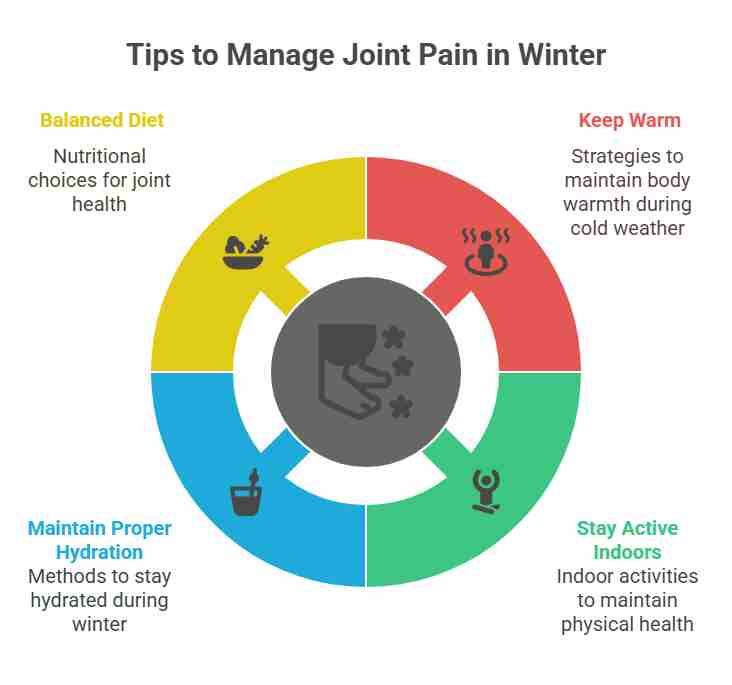
1. Keep Warm
- Wear Thermal Clothing: Layer up with warmers, socks, leggings and long jackets to protect your extremities.
- Use Heating Pads: A mild heat pack around sore areas can ease tension and improve blood flow.
- Take Warm Baths: Immersing yourself in warm water can relax muscles and reduce stiffness around joints.
Read more about - Strep Throat Causes, Symptoms & Treatment Guide.
2. Stay Active Indoors
- Gentle Exercises: Yoga, stretching, or even light cycling can keep joints flexible.
- Short Walks at Home: If it’s too cold outside, walk indoors or up and down your hallway.
- Focus on Consistency: Regular activity helps maintain muscle strength and joint function.
3. Maintain Proper Hydration
- Drink Enough Water: Aim for at least 6–8 glasses a day.
- Eat Water-Rich Foods: Soups, fruits, and vegetables contribute to hydration.
- Avoid Excessive Caffeine or Alcohol: These can increase dehydration in winter’s dry air.
4. Balanced Diet for Joint Health
- Omega-3 Fatty Acids: Found in fish like salmon or in flaxseeds, this helps to get rid of inflammation.
- Vitamin D and Calcium: Essential for bone health, especially when there’s less sun exposure in winter.
- Anti-inflammatory Foods: Berries, ginger, turmeric, and leafy greens can help reduce swelling.
When to Seek Medical Advice?
It’s wise to consult a doctor if your symptoms do not improve or seem to be getting worse. You should seek medical help if you notice:
- Persistent Pain Despite Home Remedies: If simple measures like rest, gentle stretches, or over-the-counter medication aren’t helping after a few weeks, it might be time for a thorough evaluation.
- Redness, Warmth, or Fever: These could be signs of an infection or inflammation that needs medical attention.
- Difficulty Moving: If bending or straightening a joint becomes too painful, a doctor can recommend therapies or medications to improve mobility.
- Arthritis Flare-Ups: People with existing conditions such as osteoarthritis or rheumatoid arthritis may require adjustment of medication or physiotherapy sessions if winter aggravates their symptoms.
Explore the expert guide about - How To Cure Rheumatoid Arthritis Permanently?.
Conclusion
Cold weather joint pain can feel discouraging, especially if you’re someone who loves outdoor activities or simply wants to remain mobile and independent. Yet winter’s chill doesn’t have to define your routine. At BLK-Max Super Speciality Hospital, we believe in a personalised approach to healthcare. Whether you’re seeking prevention advice, looking for new therapies, or worried about a flare-up, we're here to help you find relief and keep you moving, even in the coldest months.
Frequently Asked Questions
1. Why does joint pain increase during winter?
People often feel more aches in cold weather because lower temperatures can reduce blood flow to the muscles, leading to stiffness. A drop in barometric pressure may also cause the tissues around the joints to swell slightly.
2. How can I stop joint pain permanently?
Permanent relief depends on the cause. A healthy lifestyle, including regular exercise, balanced nutrition, and maintaining an ideal weight, can go a long way in reducing stress on the joints. For some, medication or surgical interventions might be recommended by a specialist. Techniques like physiotherapy, strength training, and using supportive gear also help in preventing further damage over time.
Learn more about - Effective Tips for Stress Management.
3. What are the common symptoms of joint pain in cold weather?
In winter, common symptoms include morning stiffness, swelling, and an uncomfortable sensation in the knees, hips, and hands. You might feel your joints tightening up if you stay inactive for a while and then try to move.
4. How does barometric pressure affect joint pain?
Barometric pressure refers to the force exerted by the weight of the air. When it decreases, tissues in and around joints can expand, leading to swelling or added tension.
5. Which doctor to see for joint pain?
You can start with a general physician if your aches are mild or infrequent. However, for severe or long-term joint issues, an orthopaedic doctor or a rheumatologist can offer more specialised care. A physiotherapist might also help you learn exercises to improve flexibility and reduce pain.
6. Can dehydration worsen joint pain in winter?
Yes, dehydration can contribute to stiffness because the fluid that lubricates your joints relies on adequate hydration. If your body doesn’t get enough fluids, cartilage can lose elasticity, making discomfort more noticeable when you move or stretch.
7. When should I consult a doctor for winter joint pain?
It’s time to see a doctor if your pain lasts for more than a couple of weeks, worsens instead of improving, or is accompanied by symptoms like redness, swelling, or fever. You should also seek medical advice if your mobility is significantly affected or if you suspect an underlying condition like arthritis.
Explore the expert guide about - Causes of Arthritis and Arthritis Types.

Written and Verified by:

Related Blogs


Medical Expert Team
Jan 24 , 2019 | 5 min read

Blogs by Doctor


Common Reasons for Leg Swelling You Should Know
Dr. Rakesh Mahajan In Centre For Orthopaedic
Aug 08 , 2024 | 4 min read
Most read Blogs


Related Blogs
Medical Expert Team
Jan 24 , 2019 | 5 min read
Blogs by Doctor
Common Reasons for Leg Swelling You Should Know
Dr. Rakesh Mahajan In Centre For Orthopaedic
Aug 08 , 2024 | 4 min read
Most read Blogs
