 +91 954 002 5025 (24/7)


To Book an Appointment
Call Us+91 954 002 5025To Book an Appointment
Call Us+91 954 002 5025What You Need to Know About Cervical Cancer
By Medical Expert Team
Jan 31 , 2019 | 2 min read

What Is Cervical Cancer?
Cervical cancer is a type of cancer that develops in the cells of the cervix, the lower part of the uterus connecting to the vagina.
Cervical cancer is the second most common cancer in Indian women after breast cancer. Every year, 96,922 women are diagnosed with cervical cancer in India, and 60,078 die (GLOBOCAN 2018). Here are some facts about this cancer, how you can prevent it, and the treatment modalities.
Cervical Cancer Facts
Cervical cancer occurs when cells of the cervix (the lower part of the uterus, which connects the uterus to the vagina) grow out of control. Symptoms of cervical cancer include:
- Irregular vaginal bleeding
- Bleeding between periods or after sexual intercourse
- Postmenopausal bleeding
- Foul-smelling vaginal discharge
Some women may also experience low back pain or lower abdominal pain.
Explore the expert guide about - 9 Reasons for Back Pain: Causes, Prevention, and Relief.
Nearly all cases of cervical cancer can be attributed to persistent Human Papillomavirus (HPV) infection. This infection is present in almost all sexually active adults and is generally cleared off by the body. In a few individuals, however, the condition persists, and if not screened, can lead to precancerous and cancerous lesions of the cervix.
Other risk factors for cervical cancer include:
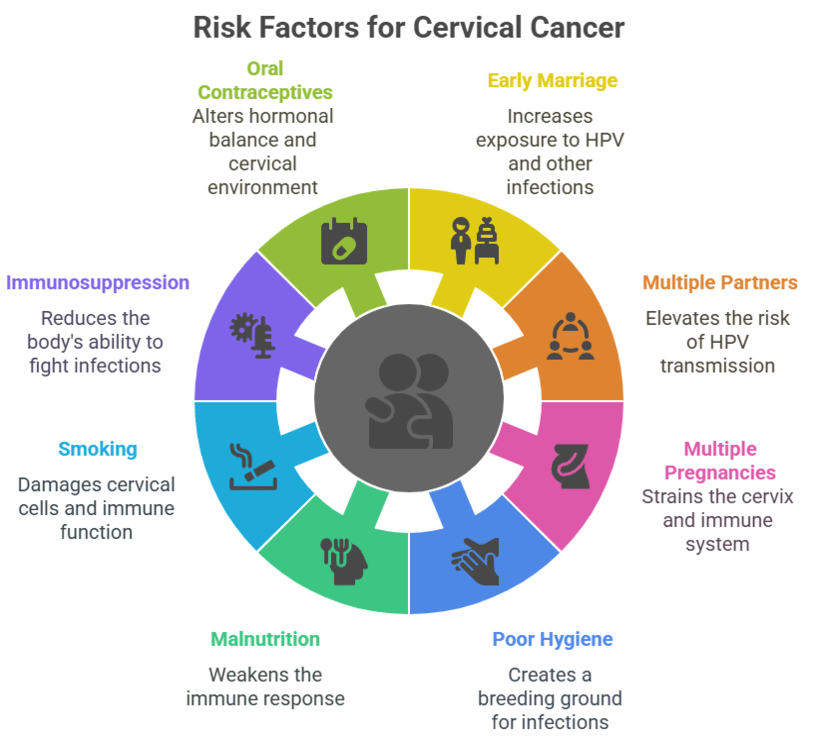
- Early age at marriage
- Multiple sexual partners
- Multiple pregnancies
- Poor genital hygiene
- Malnutrition
- Smoking
- Immunosuppression, including HIV infection
- Prolonged use of oral contraceptives.
Read more about - 10 Myths About Contraception Debunked.
Importance of Cervical Screening
A significant cause of the high incidence of cervical cancer in India is the lack of awareness of this disease and the lack of cervical screening. Screening can find changes in the cervix before cancer develops, and it can also find cervical cancer early – when it has not spread and is amenable to curative treatment.
Because of the scarcity of screening, many cases of cervical cancer are detected in advanced stages, leading to high mortality rates.
How Can You Protect Yourself Against Cervical Cancer?
If you have symptoms of cervical cancer, consult your gynaecologist or consult your gynecologic oncologist, who will do a thorough pelvic examination and tell you about the tests used for cervical screening — Pap test and HPV DNA test.
Screening guidelines include:
- Women aged 21 to 29 should have a Pap test every three years.
- From the age of 30, the preferred way to screen is:
- Every five years with a Pap test combined with an HPV test (co-testing), OR
- Every three years with a Pap test, till the age of 65.
If the Pap and/or HPV tests are abnormal, you may be advised further evaluation, which may include:
- Colposcopy (a procedure to examine an illuminated, magnified view of the cervix)
- Biopsy, followed by management according to the results.
Diagnosis for Cervical Cancer
Diagnosis of cervical cancer involves:
- A complete physical examination
- A cervical biopsy, wherein the doctor takes a small biopsy from the cervical growth to confirm malignancy
- Radiological imaging (MRI/CT/PET-CT) is advised to look for the spread of the disease, if any.
Cervical Cancer Treatment and Management
Cervical cancer treatment depends upon the stage of the disease. So if you see the symptoms of cervical cancer, contact your doctor immediately.
Treatment approaches include:
- Early-stage cervical cancer: Patients in good general condition are advised surgery. The uterus and cervix with the neighbouring tissues are removed (hysterectomy), along with the pelvis's lymph glands.
- Advanced-stage cervical cancer: Patients are treated with radiotherapy with or without chemotherapy.
BLK-MAX hospital provides the best cancer treatment in Delhi, India.
Read more about - Stages of Cervical Cancer & Treatment Options.

Related Blogs

Medical Expert Team
Feb 05 , 2019 | 4 min read

Medical Expert Team
Feb 22 , 2019 | 2 min read

Blogs by Doctor


Heat Stroke Prevention Measures: How to Stay Safe in Extreme Heat
Medical Expert Team
Jul 18 , 2019 | 3 min read
Most read Blogs


Related Blogs
Medical Expert Team
Feb 05 , 2019 | 4 min read
Medical Expert Team
Feb 22 , 2019 | 2 min read
Blogs by Doctor
Heat Stroke Prevention Measures: How to Stay Safe in Extreme Heat
Medical Expert Team
Jul 18 , 2019 | 3 min read
Most read Blogs
