 +91 954 002 5025 (24/7)


To Book an Appointment
Call Us+91 954 002 5025To Book an Appointment
Call Us+91 954 002 50255 Symptoms Every Man Should Know About Prostate Cancer
By Medical Expert Team
Aug 05 , 2026 | 6 min read

Prostate cancer is a type of cancer that occurs in the prostate, a small walnut-shaped gland in men that produces seminal fluid. To understand symptoms, patients often ask, "where is the prostate located?" It sits just below the bladder and in front of the rectum, surrounding the urethra. In India, prostate cancer is the second most common cancer among men in large cities like Delhi and Mumbai. It is one of the most common cancers in men, but it tends to grow slowly and often remains confined to the prostate gland. However, knowing what the signs of prostate cancer are is vital, as early-stage prostate cancer often has no symptoms at all.
Warning Signs at a Glance
If you notice any of the following, it is worth booking a check-up with a doctor — usually to find a benign cause, and occasionally to catch something that needs treatment:
- Difficulty starting or stopping urination, or a weak or interrupted stream
- Needing to urinate often, especially at night (nocturia)
- Blood in the urine or semen
- Burning or discomfort when passing urine, or pelvic discomfort
- Persistent, deep pain in the lower back, hips, or pelvis
Know more about -Basics of Back Pain: Reasons You Should be Aware.
Who is at Risk? Understanding Prostate Cancer Causes and Risk Factors
While the exact cause of prostate cancer is not fully understood, several factors significantly increase a man's risk:
- Age: The risk increases sharply after age 50. In the Indian context, the prevalence of benign enlargement—which can mask cancer symptoms—reaches nearly 50% by age 60.
- Race and Ethnicity: Black men have a higher risk of developing prostate cancer and are 67% more likely to be diagnosed with aggressive, advanced-stage disease.
- Genetics and Family History: If a close relative (father or brother) had the disease, your risk is at least doubled. Genetic mutations in the BRCA2 genes increase risk significantly.
- Lifestyle Factors:Obesity and a diet high in animal fats may contribute to the development of high-grade adenocarcinoma.
5 Main Symptoms of Prostate Cancer in Men
1. Trouble Urinating and Bladder Changes
One of the most common prostate cancer symptoms in men is trouble urinating. This can include starting and stopping urination, or a weak urine stream. Because the prostate surrounds the urethra, a tumor can press against it, causing hesitancy. Men often ask, "does prostate cancer hurt" during urination? While it can cause a burning sensation (dysuria), it is more frequently associated with a weak flow and a sense that the bladder is not empty.
2. Bone Pain and Signs Prostate Cancer Has Spread
Prostate cancer can cause bone pain, especially in the lower back, hips, or pelvis. This pain is often described as dull and achy. Hip pain and prostate cancer are specifically linked when the disease metastasizes (spreads) to the skeletal system. Approximately 89% of men with metastatic prostate cancer present with bone metastases at the time of their advanced diagnosis. If you experience persistent bone pain that does not improve, it may indicate that the cancer has moved beyond the gland.
3. Frequent Urination (Nocturia)
One of the most common 5 symptoms of prostate cancer is frequent urination. This can be especially bothersome at night (Nocturia) when you need to use the restroom multiple times. While these symptoms are often caused by Benign Prostatic Hyperplasia (BPH), which affects roughly 25% to 50% of Indian men over 40, it is critical to see a urological oncologist to rule out malignancy.
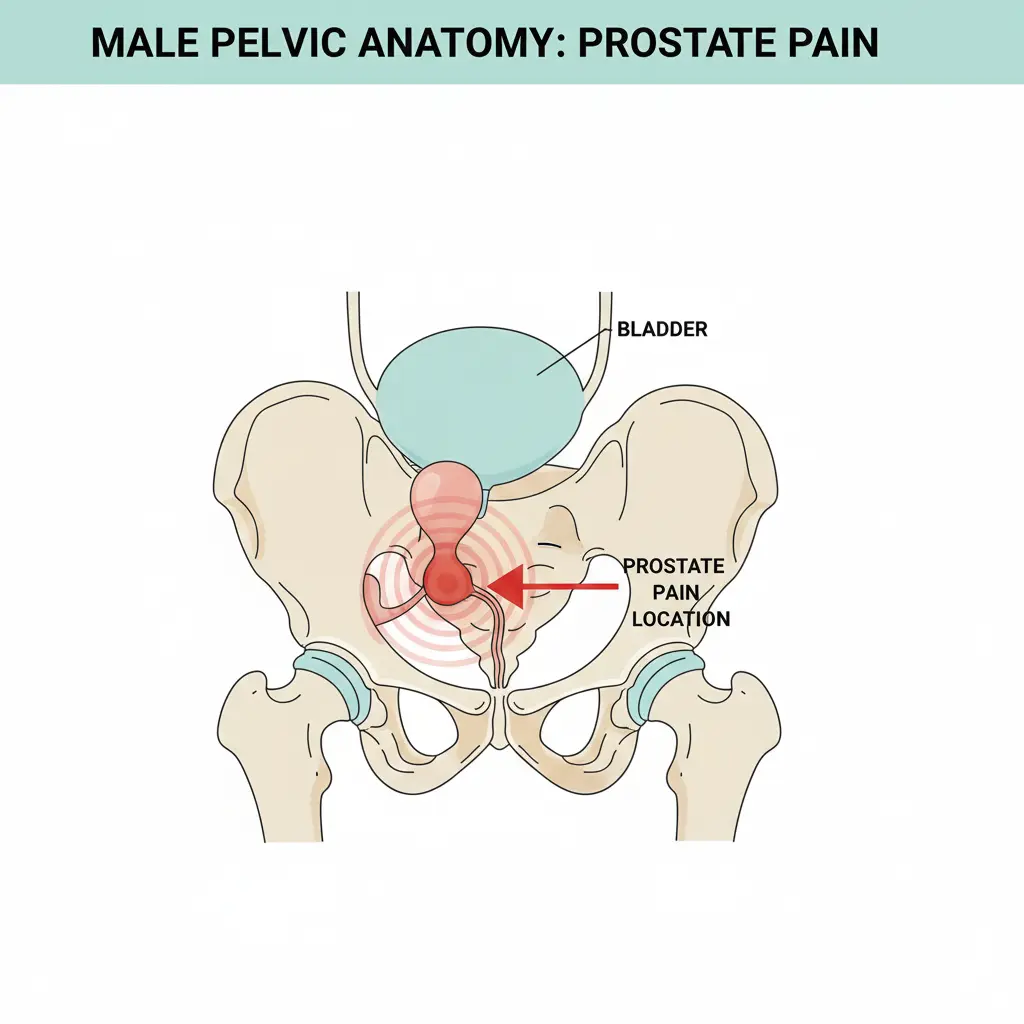
4. Prostate Cancer and Pelvic Pain
Pelvic discomfort is a key indicator among the 6 early signs of prostate cancer. What does prostate pain feel like? It is typically felt as a persistent pressure or vague discomfort in the "perineum" (the area between the scrotum and anus). This prostate pain location is critical to monitor, as it can be caused by the tumor pressing on local nerves.
5. Pain When Sitting
One of the signs of prostate cancer that is often overlooked is pain or discomfort when sitting. This can be caused by an enlarged prostate or tumor pressing on the nerves in the pelvis or the surrounding pelvic floor. If you have any pain when sitting, it's important to see a doctor. Prostate cancer is usually diagnosed with a prostate-specific antigen (PSA) test and a digital rectal exam (DRE), which are essential for making an informed clinical decision regarding your health.
Read more about - Reasons for Enlarged Prostate: Causes, Risk Factors, & More.
How is Prostate Cancer Diagnosed?
To determine if symptoms are caused by cancer, BPH, or prostatitis, doctors use a multi-step diagnostic approach:
- PSA Blood Test: Measures Prostate-Specific Antigen levels. While a PSA level below 4 ng/mL is generally considered normal, Indian guidelines suggest many cases are diagnosed at higher levels.
- Digital Rectal Exam (DRE): A physical exam where a physician feels the prostate for lumps, hard spots, or irregularities.
- Multiparametric MRI (mpMRI): Now considered a standard imaging tool that identifies suspicious areas to avoid unnecessary biopsies.
- Prostate Biopsy: If the PSA or DRE are abnormal, a tissue sample is taken to confirm the presence of adenocarcinoma cells.
Learn more about - Prostate Cancer: Types, Screening Tests & Early Detection Methods.
Frequently Asked Questions
1. What are the 5 main symptoms of prostate cancer in men?
The five primary symptoms include: (1) Difficulty starting/stopping urination, (2) Weak or interrupted urine stream, (3) Frequent urination at night (Nocturia), (4) Blood in urine or semen, and (5) Persistent bone pain in the hips or back.
2. Is prostate cancer painful in its early stages?
No, early-stage prostate cancer is typically asymptomatic. Does prostate cancer hurt? Usually, pain only occurs if the tumor grows large enough to block urine flow or spreads to the bones, affecting roughly 70–90% of patients in advanced stages.
3. What does prostate pain feel like?
Prostate pain location is usually deep within the pelvis or the perineum. It is often described as a dull, heavy pressure or a persistent ache rather than a sharp localized pain.
4. Can hip pain be a sign of prostate cancer?
Yes. Hip pain and prostate cancer are linked when the cancer cells spread to the skeletal system. This is often considered one of the signs prostate cancer has spread.
5. At what age should Indian men start screening for prostate cancer?
Most guidelines suggest men at average risk discuss screening at age 50. However, those with a family history or known genetic risk should begin conversations with their urologist at age 40 or 45.
6. What are the 6 early signs of prostate cancer I shouldn’t ignore?
Beyond urinary changes, watch for: (1) Sudden erectile dysfunction, (2) Painful ejaculation, (3) Deep pelvic pressure, (4) Unexplained weight loss, (5) Leg swelling, and (6) A persistent feeling of a full bladder.
7. Does an enlarged prostate always mean cancer?
No. An enlarged prostate is most commonly Benign Prostatic Hyperplasia (BPH). However, because symptoms overlap, a PSA test and DRE are necessary to rule out malignancy.
8. Can prostate cancer spread to the legs?
Advanced prostate cancer can cause leg pain or swelling (Lymphedema) if it affects the lymph nodes in the groin or presses on the spinal cord.
9. Is prostate cancer curable?
When detected in the early stages (localized), the 5-year survival rate is nearly 100%. Early detection through screening is the most effective way to ensure a cure.
10. What is the most common symptom of prostate cancer?
The most reported symptoms involve urinary changes, such as a weak stream or needing to urinate multiple times during the night.
11. Does a high PSA level always mean I have cancer?
No. PSA (Prostate-Specific Antigen) can be elevated by several factors, including an enlarged prostate (BPH), a recent urinary tract infection, or even recent vigorous exercise or sexual activity.
12. Can prostate cancer spread to the bladder?
While less common than bone spread, it can occur in 5–10% of advanced cases. Symptoms include intense pelvic pain, total inability to urinate, or recurrent urinary tract infections (UTIs).
Medical Disclaimer: The information provided here is for educational purposes only and should not be used as a substitute for professional medical advice, diagnosis or treatment of prostate cancer. Always seek the advice of your physician regarding a medical condition.
Reference-list
- Kratzer, T. B., et al. (2025). Prostate cancer statistics, 2025. CA: A Cancer Journal for Clinicians. https://pmc.ncbi.nlm.nih.gov/articles/PMC12593258/
- Urological Society of India. (2022). The Urological Society of India guidelines for the evaluation and management of prostate cancer. https://pmc.ncbi.nlm.nih.gov/articles/PMC9787438/
- Medical News Today. (2025, April 14). Can prostate cancer cause leg pain? Research and more. https://www.medicalnewstoday.com/articles/prostate-cancer-leg-pain

Related Blogs

Medical Expert Team
Jan 29 , 2025 | 6 min read


Blogs by Doctor
What Is an Oncologist? Understanding Their Role & How to Choose the Right One for Cancer Care
Medical Expert Team
Jan 29 , 2025 | 6 min read


Most read Blogs


Related Blogs
Medical Expert Team
Jan 29 , 2025 | 6 min read
Blogs by Doctor
What Is an Oncologist? Understanding Their Role & How to Choose the Right One for Cancer Care
Medical Expert Team
Jan 29 , 2025 | 6 min read
Most read Blogs
