 +91 954 002 5025 (24/7)


To Book an Appointment
Call Us+91 954 002 5025To Book an Appointment
Call Us+91 954 002 5025Sleeping Disorders: Causes, Symptoms, and How to Improve Sleep Quality
By Dr. Sandeep Nayar in Centre For Chest & Respiratory Diseases , Sleep Disorders
May 15 , 2025 | 6 min read
1

Struggling to fall asleep or waking up tired even after a full night’s rest? You’re not alone. A sleeping disorder can sneak up without warning and start affecting your daily life—your energy, mood, focus, and even your long-term health.
Whether it’s trouble staying asleep, loud snoring, or feeling restless at night, poor sleep isn’t something to ignore. Many people live with undiagnosed sleep issues for years, thinking it’s just stress or a bad habit.
The good news? Most sleep problems can be managed or treated. Let’s understand the common causes, signs, and simple steps to help improve your sleep quality.
What is a Sleeping Disorder?
A sleeping disorder is worse than a night's poor sleep. It's when sleeping problems become an ongoing pattern and begin to impact your daily life - the way you feel, the way you think, and the way your body works.
Everyone experiences an occasional sleepless night, but when you're not sleeping well for days or weeks, it can have a negative impact on your mood, concentration, energy levels, and health.
Sleep plays a very important role in helping the body and brain recover. Poor sleep isn’t just about feeling tired. It’s been linked to high blood pressure, low immunity, weight gain, and even heart disease.
A proper diagnosis and timely support can significantly impact how you function during the day and how well your body recovers overnight.
Learn more about - 7 Myths About Hypertension and Facts.
Common Symptoms of Sleeping Disorders
When we talk about symptoms of a sleeping disorder, people often think only of insomnia. But the signs are much broader.
Struggling to fall asleep, waking up several times a night, or feeling completely drained despite being in bed for hours - these are all signs that your sleep might not be working as it should.
Daytime sleepiness is another red flag. If you're frequently tired during the day, it might point to an issue with how restful your sleep really is.
Snoring is often seen as harmless or even joked about. But if it’s loud, comes with gasping sounds, or leads to disrupted sleep, it could be a symptom of something more serious, like sleep apnea. You might also feel restless while sleeping, tossing and turning, or even moving your limbs in ways you don't remember the next morning.
Types of Sleeping Disorders
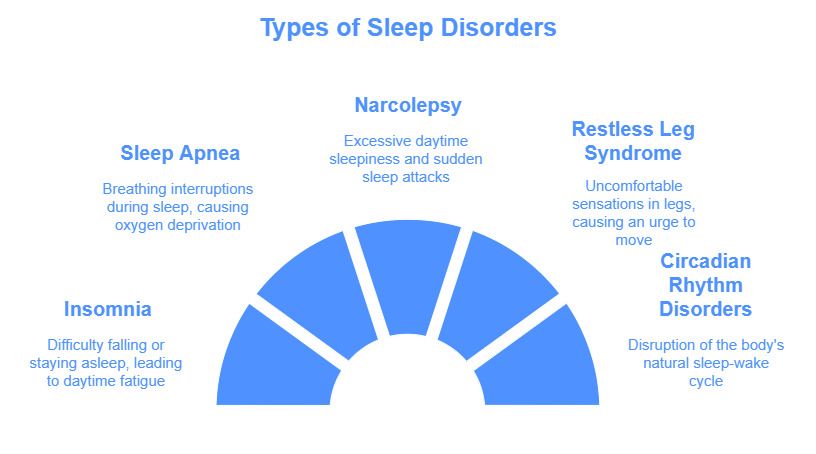
There are several types of sleeping disorders, and each one behaves differently in the body.
1. Insomnia
Insomnia is the one most people recognise. It shows up as trouble falling asleep or staying asleep. You might find yourself awake at 2 am with your thoughts racing, or waking up too early and not being able to fall back asleep, even when you’re tired.
2. Sleep Apnea
Sleep apnea is different. It’s caused by blocked airways during sleep, which leads to breathing interruptions. People with sleep apnea often snore loudly and wake up feeling like they haven’t rested at all, even if they were in bed for eight hours.
3. Narcolepsy
Narcolepsy is a rare but serious condition where you can fall asleep suddenly during a conversation, while eating, or even in the middle of daily tasks. It’s caused by a disruption in the brain’s sleep-wake cycle.
4. Restless Leg Syndrome (RLS)
Restless leg syndrome, or RLS, leads to an intense urge to move your legs, especially at night. The sensation can feel like tingling, itching, or even a crawling feeling. It tends to improve with movement, but can make it hard to fall asleep.
Learn more about - Leg Pain Reasons.
5. Circadian Rhythm Disorders
Circadian rhythm disorders affect your internal body clock. This includes shift work disorder, common among people who work night shifts, and jet lag, which affects those who travel across time zones.
Sleeping Disorders Causes: What Triggers Poor Sleep?
The causes of sleeping disorders aren’t always obvious.
Mental Health and Stress
- Stress and mental health issues often sit at the top of the list.
- Anxiety and depression can show up through poor sleep, even before other signs become obvious.
Read more about - Effective Tips for Stress Management, 7 Key Facts to Understand About Cardiac Stress Test and Causes of Depression.
Physical and Medical Conditions
Physical conditions like
- Thyroid imbalance
- Acid reflux
- Asthma
- Chronic pain
- Hormonal changes during pregnancy or menopause can leave your sleep feeling broken or restless.
Read more about - Asthma Causes and Asthma Types, Symptoms & Natural Remedies.
Poor Daily Habits
- Daily habits matter more than you think.
- Caffeine in the evening
- Spicy meals too close to bedtime
- Late-night scrolling on your phone
- Sleeping in on weekends or changing your sleep schedule too often
Sometimes, it’s not just one thing—it’s a mix of small habits or hidden issues adding up over time. Fixing sleep often starts with spotting what’s really getting in the way.
Diagnosis and Tests for Sleeping Disorders
If sleep problems go on for more than a few weeks, it’s a good idea to talk to a doctor.
What Diagnosis Typically Involves:
Diagnosing a sleeping disorder usually starts with understanding your sleep habits—when you go to bed, how often you wake up, and how you feel during the day. Based on your answers, your doctor might suggest some tests for a clearer picture.
Key Diagnostic Tools:
- Polysomnography (Sleep Study): A sleep study, or polysomnography, is one of the most detailed tests. Done overnight in a sleep lab, it tracks your breathing, heart rate, brain activity, and movements to check for issues like sleep apnea or restless leg syndrome.
- Home Sleep Tests: If sleep apnea is suspected, a simple home test might be recommended. It monitors breathing and oxygen levels while you sleep in your own bed.
- Questionnaires: Doctors may also use sleep questionnaires—easy-to-fill forms that help pinpoint how sleep is affecting your health and guide the next steps in your treatment plan.
Treatment and Management of Sleeping Disorders
Lifestyle-Based Treatments
Managing a sleeping disorder doesn’t always start with medicine. Often, the first step is changing the way you sleep. Building better sleep habits—like going to bed and waking up at the same time, keeping your room cool and quiet, and staying off screens before bed—can really help. Avoiding tea or coffee in the evening is another small change that can make a big difference.
If your sleep issues are more serious, treatment might include medication or therapy. Short-term use of sleep aids may help, but long-term use is generally not advised unless your doctor says so.
Therapy and Medical Support
- Cognitive Behavioural Therapy (CBT): CBT is one of the best treatments for insomnia. It helps replace negative thoughts about sleep with healthier ones.
- Medications: Short-term sleep aids may help but aren’t ideal for long-term use without doctor supervision.
- CPAP Machine: For people with sleep apnea, a CPAP machine can improve breathing during sleep. And if anxiety, chronic pain, or thyroid issues are causing poor sleep, treating the root cause can often fix the problem naturally.
Read more about - Insomnia Symptoms and The Role of Inhalers in Asthma Management.
Conclusion
A sleeping disorder can take a quiet toll on your quality of life. The good news is, you don’t have to live with it.
Whether your sleep is being affected by stress, irregular work hours, medical issues, or simply habits you didn’t realise were harmful, the right support and small lifestyle changes can make a big impact.
At BLK-Max Super Speciality Hospital, we work closely with individuals facing sleep issues, offering assessments, therapy, and long-term solutions tailored to each person’s needs.
If sleep has been a struggle for you, book a consultation. Let’s work together to help you sleep better, feel energised, and reclaim your well-being, one night at a time.
Frequently Asked Questions
1. What are the signs of a sleeping disorder?
Trouble falling asleep, frequent waking, loud snoring, or feeling tired after sleep could point to a sleeping disorder rather than just occasional restlessness or stress.
2. How can I improve my sleep quality naturally?
Stick to a regular sleep schedule, avoid caffeine late in the day, reduce screen time before bed, and create a quiet, cool, relaxing bedroom environment.
3. When should I see a doctor for sleep problems?
See a doctor if sleep issues affect your daily focus, energy, or mood, or if you snore loudly, wake up gasping, or feel sleepy despite full sleep.
4. Are sleeping pills safe for long-term use?
Sleeping pills may help in the short term, but long-term use can cause dependence and reduce effectiveness. Always consult a doctor before continued use.
5. Can stress and anxiety cause sleep disorders?
Yes, stress and anxiety can keep your mind and body alert at night, making it hard to fall or stay asleep.
6. Do psychologists treat sleep disorders?
Yes, psychologists can treat sleep issues using therapies like CBT, especially when linked to stress, anxiety, or depression.

Written and Verified by:

Related Blogs


Medical Expert Team
May 13 , 2019 | 5 min read

Blogs by Doctor

Tuberculosis of Lymph Nodes: Is It Curable?
Dr. Sandeep Nayar In Centre For Chest & Respiratory Diseases
Mar 30 , 2022 | 1 min read

Most read Blogs


Related Blogs
Medical Expert Team
May 13 , 2019 | 5 min read
Blogs by Doctor
Tuberculosis of Lymph Nodes: Is It Curable?
Dr. Sandeep Nayar In Centre For Chest & Respiratory Diseases
Mar 30 , 2022 | 1 min read
Most read Blogs
