 +91 954 002 5025 (24/7)

To Book an Appointment
Call Us+91 954 002 5025To Book an Appointment
Call Us+91 954 002 5025Best Diet and Lifestyle Changes for Managing Polycystic Ovary Syndrome (PCOS)
By Medical Expert Team
May 09 , 2023 | 18 min read

Polycystic Ovary Syndrome (PCOS) and Polycystic Ovary Disorder (PCOD) are among the most common hormonal conditions affecting women of reproductive age. Women with PCOS typically develop numerous small fluid-filled sacs or cysts in their ovaries. Symptoms often include irregular periods, excessive production of androgen (male hormone), which can lead to hirsutism (excess body or facial hair), mood swings, and depression. Managing PCOS involves a multi-pronged approach, including medication, and crucially, strategic PCOS and PCOD diet chart implementation alongside lifestyle changes.
Understanding the PCOS/PCOD Nutritional Plan
A PCOS diet is a nutritional plan specifically designed to target the underlying metabolic and hormonal imbalances associated with the condition. Its primary goals are to:
- Stabilize insulin levels: Since women with PCOS often struggle with insulin resistance, the diet prioritizes foods with a low Glycemic Index (GI).
- Reduce chronic inflammation: It incorporates anti-inflammatory foods to mitigate the low-grade systemic inflammation prevalent in PCOS.
- Support hormonal balance: By controlling insulin and reducing inflammation, the diet directly aids in regulating sex hormones (androgens).
- Improve metabolism and weight management: The focus on high-fiber foods, lean proteins, and healthy fats helps increase satiety, curb cravings, and support a healthy weight.
A PCOS diet typically includes low-GI carbs, high-fiber vegetables, lean proteins, healthy fats, anti-inflammatory foods, and adequate hydration.
How Does Diet Affect PCOS?
Diet plays a crucial and powerful role in managing PCOS symptoms, primarily through its impact on insulin and inflammation.
Insulin Resistance Management
Over 50% of women with PCOS may develop pre-diabetes or type 2 diabetes before the age of 40. In insulin resistance, the body's cells don't respond effectively to insulin, leading to elevated blood glucose and subsequently, the pancreas producing even more insulin. High insulin levels stimulate the ovaries to produce excess androgens (male hormones), which worsen PCOS symptoms like hirsutism, acne, and irregular ovulation. A PCOS diet chart based on low-GI foods and balanced macronutrients is paramount for regulating insulin and managing these symptoms.
Inflammation Reduction
Chronic low-grade inflammation is a significant driver of PCOS severity. Foods high in refined sugar and unhealthy fats increase this inflammation. An anti-inflammatory diet, rich in antioxidants and Omega-3 fatty acids, directly counters this, potentially easing symptoms and supporting overall hormonal health.
Explore Diet Chart for Weight Loss for Female and Male and Dash Diet Plan.
Understanding Insulin Resistance & PCOS Diet
Insulin resistance is the root cause of many PCOS symptoms and is influenced directly by diet. When you eat, food is broken down into glucose, which is released into the bloodstream. Insulin, a hormone from the pancreas, acts like a key to let this glucose into cells for energy.
In insulin resistance, this key doesn't work well, causing glucose to build up in the blood. The body compensates by producing even more insulin (hyperinsulinemia). This excess insulin is a key factor that triggers the overproduction of androgens in the ovaries, exacerbating PCOS symptoms.
The PCOS diet manages this by focusing on:
- Low Glycemic Index (GI) Foods: These foods, like whole grains and non-starchy vegetables, are digested slowly, preventing rapid spikes in blood sugar and the resulting insulin surge.
- Pairing Macronutrients: Always combining carbohydrates with protein and fiber slows down glucose release into the bloodstream, reducing the demand on the pancreas for insulin.
- Meal Timing: Eating your largest meals earlier in the day when your body is more active helps utilize the glucose for energy, preventing it from building up.
Read more about - Polycystic Ovary Syndrome (PCOS): Causes & Relief.
Daily Nutritional Requirements for PCOS
While a dietitian should personalize your diet plan, a typical PCOS diet plan may adhere to the following guidelines, with an emphasis on nutrient quality over strict quantity:
| Nutrient | Recommended Intake (Typical Range) |
|
Total Calories |
1600–2000 kcal/day (individualized) |
|
Protein |
50–60 g or 20–25% of total energy |
|
Carbohydrates |
300–350 g (low GI preferred) or 60–65% of total energy |
|
Total Fat |
25–30 g or 15–17% of total energy |
|
Fiber |
At least 25 grams daily |
|
Calcium |
600 mg |
|
Iron |
21 mg |
|
Sodium |
1200 mg |
Important Micronutrients to Consider:
- Vitamin D: Often deficient in women with PCOS, it plays a role in insulin sensitivity and ovulation.
- Omega-3 Fatty Acids: Found in fish and flax seeds, these healthy fats reduce inflammation.
- Magnesium: Helps improve insulin sensitivity and may alleviate mood symptoms.
Ideal Meal Timing for PCOS
Consistent and timely eating is vital for PCOS management, as it prevents long gaps that can destabilize blood sugar.
Principle: Eating earlier in the day when you are most active allows your body to effectively use the glucose for energy, reducing the load on the insulin system.
Sample Timing:
- Breakfast: Within 9:00 AM
- Mid-day Snack: Around 11:00 AM
- Lunch: At 1:00 PM
- Evening Snack: At 4:00 PM
- Dinner: By 8:00 PM
Note on Intermittent Fasting: While traditional timing recommends frequent small meals, some recent PCOS diet trends suggest methods like Intermittent Fasting (IF) for certain individuals. However, this should only be explored under the guidance of a doctor or dietitian.
PCOS Diet: Foods to Include
A PCOS-friendly diet is rich in anti-inflammatory, high-fiber, and low-GI foods. These choices help stabilize blood sugar and promote hormonal balance.
1. Low-GI Carbohydrates
- Whole Grains: Oats, whole wheat rotis, brown rice, quinoa, and barley.
- Millets: Ragi, jowar, and bajra.
- Legumes: Lentils and beans.
2. High-Fiber Vegetables
- Broccoli, spinach, beans, okra, cabbage, carrots, beetroot, cauliflower, and mushrooms.
3. Lean Proteins
- Eggs (egg whites preferred).
- Fish (especially Omega-3 rich fish like salmon), chicken (skinless/lean poultry).
- Plant-Based: Tofu, soya chunks, and lentils/legumes.
4. Healthy Fats
- Nuts (almonds, walnuts) & seeds (flax seeds, chia seeds, pumpkin seeds).
- Oils: Olive oil, avocado oil, and ghee (in small moderation).
- Avocado.
5. Anti-inflammatory Foods
- Turmeric (curcumin), ginger, and herbal teas (like green tea, spearmint tea).
- Berries (blueberries, strawberries, raspberries).
6. PCOS Fruits to Eat
- Focus on low-GI, high-fiber fruits to maintain stable blood sugar.
- Best Choices: Apples, pears, berries (strawberries, blueberries, raspberries), kiwi, guava, and oranges/grapefruit.
PCOS Foods to Avoid & Why
Certain foods can worsen PCOS symptoms by triggering insulin spikes and increasing inflammation. Limiting or avoiding these is essential for a successful PCOS diet chart.
1. Refined Carbohydrates
White bread, white rice (consume brown/unpolished rice in moderation), white pasta, maida rotis, and most bakery items.
Why: They have a high GI, causing rapid blood sugar and insulin spikes.
2. Sugary Drinks & Sweets
Soda, packaged fruit juices, sweetened yogurts, cold-pressed juices (without fiber), cakes, cookies, and candies.
Why: Excessive sugar intake leads to high insulin production and chronic inflammation.
3. Junk Food & Processed Snacks
Highly processed snacks, chips, crackers, and fast food.
Why: They are often high in trans-fats, saturated fats, sugar, and preservatives, which promote inflammation and insulin resistance.
4. Fried Foods
Samosas, pakoras, and any deeply fried foods.
Why: High in inflammatory saturated and trans fats.
5. Red & Processed Meats
Red meat (mutton, pork, beef) and processed meats (sausages, bacon).
Why: They are high in saturated fats and cholesterol, which can increase inflammation and hormonal imbalance.
6. Fruits to Avoid/Limit
Fruits with a high Glycemic Index or high natural sugar content should be limited or eaten in moderation, especially when over-ripe.
- Examples: Mangoes, bananas (especially over-ripe), grapes, and dried fruits (raisins, dates, figs).
Why: Concentrated sugar can lead to rapid blood sugar spikes.
7. Dairy (Nuances)
Avoid excess or full-fat dairy, as some individuals with PCOS find it worsens symptoms like acne or bloating. However, low-fat/low-GI options like low-fat curd or Greek yogurt are often well-tolerated and provide beneficial probiotics and protein.
Is Paneer Good for PCOS and PCOD Weight Loss?
Yes, paneer can be a very good food choice for PCOS and PCOD, especially for weight loss, when consumed in moderation and as part of a balanced meal.
1. High in Lean Protein
Paneer (Indian cottage cheese) is an excellent source of lean protein, which is vital for building muscle mass, increasing satiety, and stabilizing blood sugar when paired with carbohydrates. Protein consumption is a core strategy to curb cravings and stop PCOS weight gain.
2. Insulin Regulation
As a protein source, paneer helps lower insulin resistance, a key component of managing PCOS.
3. The Dairy Nuance
While some full-fat dairy can be problematic due to hormones or individual sensitivities, low-fat or skimmed-milk paneer is a popular and effective component of a lean, protein-rich diet. If dairy causes bloating or acne, it's best to consult a dietitian to assess tolerance.
PCOS-Friendly Paneer Consumption:
- Opt for a low-fat paneer.
- Use cooking methods like grilling, baking, or light sautéing rather than deep frying.
- Pair it with high-fiber vegetables or whole grains (e.g., Paneer Bhurji with Bajra Roti) for a complete, balanced meal.
7 Days PCOS & PCOD Diet Chart – Weekly Meal Plan (Indian Focus)
This detailed 7-day PCOS and PCOD diet chart provides a mix of vegetarian and non-vegetarian Indian meals, focusing on the principles of low-GI, high-fiber, and adequate protein for weight management.
|
Day |
Early Morning (7:00 AM) |
Breakfast (9:00 AM) |
Mid-day Snack (11:00 AM) |
Lunch (1:00 PM) |
Evening Snack (4:00 PM) |
Dinner (8:00 PM) |
|
Sunday |
Warm water with lemon + 5 soaked almonds |
Vegetable Upma (broken wheat) (1 cup) + Green Beans Fry (½ cup) |
Sprouts (green gram) (1 cup) |
Roti (2) + Cabbage Sabzi (½ cup) + Fish Curry (100g) + Salad |
Roasted Chana (½ cup) + Light Tea (1 cup) |
Roti (2) + Tomato Sabzi (½ cup) |
|
Monday |
Warm Jeera (cumin) water |
Brown Bread (2 slices) + Low-fat Cheese (1 slice) + Boiled Egg Whites (2) |
1 Pear or 1 Orange |
Brown Rice (1 cup) + Soya Chunk Curry (½ cup) + Buttermilk (½ cup) |
Green Tea + Handful of Walnuts |
Roti (2) + Lady’s Finger Fry (½ cup) |
|
Tuesday |
Warm Methi (fenugreek) water |
Besan Chilla with Veggies + Mint Chutney |
Black Channa (boiled) (½ cup) |
Jowar Roti (2) + Palak Curry (½ cup) + Low-fat Curd (½ cup) |
Roasted Makhana (fox nuts) |
Moong Dal Soup + Sautéed Zucchini |
|
Wednesday |
Warm water with lemon + 5 soaked almonds |
Vegetable Oats or Poha + 1 Boiled Egg |
Cucumber and Carrot Sticks with Hummus |
Quinoa Pulao (1 cup) + Dal (½ cup) + Salad (1 cup) |
Brown Rice Poha (1 cup) + Light Tea (1 cup) |
Grilled Paneer/Tofu Tikka + Sautéed Bell Peppers |
|
Thursday |
Warm water with a pinch of Cinnamon |
Ragi Dosa (1) + Sambar (½ cup) + Coconut Chutney (1 tbsp) |
Apple Slices with a dollop of Peanut Butter |
1-2 Multigrain Rotis + Rajma (Kidney Beans) + Mixed Salad |
Green Tea + 8 Almonds |
Chicken Curry (Lean) with Cauliflower Rice |
|
Friday |
Warm Jeera (cumin) water |
Vegetable Upma (daliya) + 1 Boiled Egg (optional) |
Buttermilk (Chaas) + Papaya Slices |
Brown Rice (1 cup) + Chole (Chickpeas) + Mixed Salad |
Coconut Water + Handful of Roasted Chana |
Tofu Stir Fry with Veggies + 1 Millet Roti |
|
Saturday |
Warm water with lemon + 5 soaked almonds |
Moong Dal Cheela + Curd + Steamed Broccoli |
Greek Yogurt with Berries |
1-2 Multigrain Chapatis + Dal + Green Vegetable Curry + Salad |
Herbal Tea + Trail Mix (Nuts/Seeds) |
Bajra, Moong and Peas Khichdi |
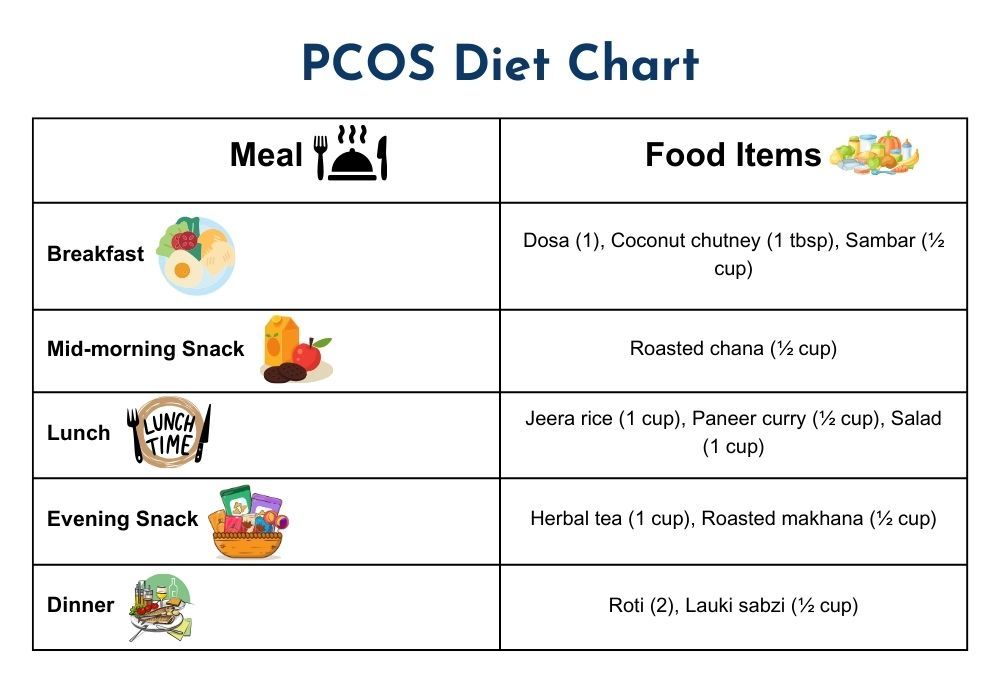
Simple Indian PCOS Diet Chart
This simple, easy-to-follow Indian PCOS diet chart emphasizes common low-GI foods and balanced nutrients.
|
Meal |
Food Items |
|
Early Morning |
Warm water with lemon + 1 soaked fenugreek seed spoon |
|
Breakfast |
Dosa (1) + Coconut chutney (1 tbsp) + Sambar (1/2 cup) |
|
Mid-morning Snack |
1 seasonal low-GI fruit (apple, orange) + Roasted chana (1/2 cup) |
|
Lunch |
2 Rotis or 1 cup brown rice + Dal / Vegetable curry + Salad + Low-fat curd |
|
Evening Snack |
Green tea / Herbal tea + handful of nuts or roasted chana |
|
Dinner |
2 Rotis or 1 cup millet khichdi + Light sabzi + Soup or grilled paneer/chicken |
|
Bedtime |
Warm turmeric milk (low fat, optional) or plain warm water |
PCOS Diet Plan for Weight Loss
The goal of this PCOS diet plan for weight loss is to create a moderate calorie deficit while focusing heavily on low-GI foods, high fiber, and lean protein to combat insulin resistance.
|
Meal |
Food Options |
|
Morning (empty stomach) |
Warm water with lemon OR fenugreek seeds water |
|
Breakfast |
Vegetable oats or poha + 1 boiled egg or 1 cup sprouts |
|
Mid-morning Snack |
1 apple or 1 cucumber |
|
Lunch |
1 multigrain roti + mixed vegetable sabzi + salad + 1 bowl low-fat curd |
|
Evening Snack |
Green tea + handful of almonds |
|
Dinner |
Grilled paneer/tofu OR vegetable soup + 1 multigrain roti |
|
Before Sleeping |
1 cup warm turmeric milk (without sugar) |
PCOS/PCOD Diet Chart (Vegetarian) for Weight Loss
This vegetarian-only PCOD diet chart uses plant-based proteins and fiber-rich meals, strictly adhering to low-GI principles.
|
Meal |
Food Options |
|
Morning (empty stomach) |
Warm jeera (cumin) water |
|
Breakfast |
Besan chilla with veggies OR moong dal dosa |
|
Mid-morning Snack |
A handful of walnuts or a pear |
|
Lunch |
1-2 multigrain chapatis + dal + sabzi + salad |
|
Evening Snack |
Roasted makhana or green tea with peanuts |
|
Dinner |
Vegetable khichdi OR tofu stir-fry with veggies |
|
Before Sleeping |
Herbal tea (like chamomile) |
PCOD Diet Chart For Weight Gain
For women with PCOD/PCOS who are underweight or have a poor appetite, this chart focuses on nutrient-dense, calorie-rich, yet still healthy options.
|
Meal |
Food Options |
|
Morning (empty stomach) |
Banana smoothie with nuts |
|
Breakfast |
Paneer paratha with curd + 1 boiled egg (optional) |
|
Mid-morning Snack |
Peanut butter sandwich or trail mix |
|
Lunch |
2 chapatis + dal + sabzi + paneer or tofu + 1 bowl curd |
|
Evening Snack |
Milkshake (banana, dates, or mango) with seeds |
|
Dinner |
Rice + dal + sabzi + 1-2 pieces of sweet potato |
|
Before Sleeping |
Warm milk with soaked almonds |
PCOD Diet Chart For Pregnancy
This plan supports women with PCOD/PCOS during pregnancy or while planning for it, ensuring stable blood sugar and adequate nutrients for both mother and baby.
|
Meal |
Food Options |
|
Morning (empty stomach) |
4 soaked almonds + 2 walnuts + warm milk |
|
Breakfast |
Vegetable upma or daliya (porridge) + 1 boiled egg (optional) |
|
Mid-morning Snack |
Fresh fruit (apple, banana, or orange) |
|
Lunch |
1-2 chapatis + dal + green vegetables + salad + 1 bowl curd |
|
Evening Snack |
Coconut water + handful of roasted chana |
|
Dinner |
Khichdi or rice with dal and vegetables |
|
Before Sleeping |
Warm milk with a pinch of turmeric |
PCOS Dinner Ideas Indian Style
Dinner for a PCOS diet should be light, protein-based, and consumed before 9 PM to support digestion and reduce overnight insulin spikes.
- Protein-Rich & Low-Carb:
- Palak Paneer (Dry) with Millet Roti: Spinach and paneer sautéed lightly, paired with a fiber-dense Bajra or Jowar roti.
- Grilled Fish/Chicken Tikka Salad: Lean grilled protein served over a large raw papaya or cucumber-onion salad.
- Daadi's High-Protein Paneer Soup: A broth-based soup with vegetables and cubed paneer or tofu for a light, digestible meal.
- Whole Grains & Pulses:
- Quinoa Rajma Bowl: A protein and fiber combination using quinoa instead of white rice.
- Oats Vegetable and Brown Rice Khichdi: A warm, comforting meal that balances whole grains, pulses, and vegetables.
- Quick & Simple:
- Besan Cheela: Chickpea flour pancake with lots of chopped vegetables, served with mint chutney.
Lifestyle & Exercise Tips for PCOS Management
Diet is a foundation, but complementary lifestyle changes significantly enhance PCOS management and symptom reversal.
- Exercise Regularly: Aim for at least 150 minutes a week of moderate-intensity exercise. This can be a combination of walking, yoga, Pilates, or strength training. Regular physical activity helps the body use insulin more effectively, directly improving insulin resistance.
- Tip: Implement the 30-30-30 Rule: 30g protein within 30 minutes of waking, followed by 30 minutes of light movement (like walking) after meals.
- Prioritize Sleep Hygiene: Target 7–8 hours of quality, uninterrupted sleep nightly. Poor sleep disrupts the regulation of hormones (including those controlling appetite) and can worsen insulin resistance.
- Manage Stress Effectively: The stress response (HPA axis dysregulation) can negatively impact PCOS symptoms. Incorporate daily stress-reducing activities such as meditation, deep breathing exercises, journaling, or yoga.
- Stay Hydrated: Drink 8–10 glasses of water daily to support metabolism, flush out toxins, and aid satiety.
- Practice Consistent Meal Timings: Eat frequent, small meals every 3-4 hours to keep blood sugar stable and prevent insulin surges.
PCOS Diet vs PCOD Diet – Is There a Difference?
Nutritionally and from a dietary management perspective, both the PCOS diet and the PCOD diet are identical.
The core principles remain the same for both conditions, focusing on managing the underlying metabolic issues:
- Controlling insulin levels.
- Promoting weight management.
- Reducing chronic inflammation.
- Eating a balanced diet of low-GI foods, high fiber, and lean protein.
While PCOS is considered a more severe 'syndrome' with more complex criteria (Rotterdam criteria), the primary dietary strategy for both the 'syndrome' and the 'disorder' is identical because they share the same key drivers: insulin resistance and inflammation.
Common Myths About PCOS Diet Debunked
|
Myth |
Fact |
|
You must completely cut out all carbohydrates. |
Carbohydrates are essential for energy. The focus should be on replacing refined, high-GI carbs (like white bread) with whole, low-GI options (like millets, brown rice, whole-wheat roti). Always pair carbs with protein and fiber. |
|
Intermittent Fasting (IF) or Keto is the only way to manage PCOS. |
While IF or a ketogenic diet may benefit some under strict supervision, the best long-term diet is a sustainable, balanced plan rich in whole foods, following a Mediterranean or DASH-style pattern. Extreme diets can sometimes increase stress hormones. |
|
All dairy products must be avoided. |
Many women tolerate low-fat dairy like low-fat curd, buttermilk, or unsweetened Greek yogurt, which offer valuable protein and probiotics. Only eliminate dairy completely if it is confirmed to trigger symptoms like acne or bloating. |
|
Fruit is bad because it contains sugar. |
Low-GI fruits like berries and apples are excellent sources of fiber and antioxidants. High-sugar fruits like mangoes and bananas should be eaten in moderation and paired with a handful of nuts or protein. |
Read more about - Keto vs. Mediterranean Diet: Benefits & Meal Plan.
Conclusion
Managing PCOS is a journey that requires commitment to a balanced diet and sustained lifestyle modifications. A well-structured PCOS diet chart, centered on regulating insulin and curbing inflammation, is the most powerful non-pharmacological tool at your disposal. By consistently choosing low-GI whole foods, prioritizing lean protein, and making strategic lifestyle changes, you can effectively control symptoms, support hormonal health, and achieve your weight management goals.
For a truly personalized PCOS diet plan tailored to your specific hormonal profile, sensitivities, and life stage (e.g., pregnancy, weight gain), it is highly recommended to consult a doctor or a registered dietitian.
Frequently Asked Questions
1. What is PCOS?
PCOS (Polycystic Ovary Syndrome) is a common hormonal disorder that affects women of reproductive age, where small cysts may develop in the ovaries. It is characterized by hormonal imbalances, leading to symptoms like irregular menstrual periods, excess androgen (male hormone) production, and difficulty conceiving.
2. How does diet affect PCOS?
Diet is fundamental to managing PCOS because it directly impacts two primary drivers of the condition: insulin resistance and chronic inflammation. By consuming low-GI, high-fiber, and anti-inflammatory foods, a proper diet regulates insulin levels, supports weight management, and helps balance hormones.
3. What foods should be avoided in PCOS?
Foods that cause rapid blood sugar spikes and inflammation should be avoided. These include refined carbohydrates (white bread, maida products), processed foods, sugary drinks, trans fats, excessive red/processed meats, and high-GI sweets/snacks.
4. What is the best diet for PCOS?
The best diet for PCOS patients is one that stabilizes blood sugar and reduces inflammation. It typically includes a high intake of: high-fiber foods (vegetables, whole grains), lean proteins (paneer, eggs, fish, tofu, legumes), healthy fats (nuts, seeds, olive oil, avocado), and low-GI fruits (berries, apples, pears).
Explore the expert guide about - Super foods for women and How a Dietitian Chart Can Help You Manage Your Diet and Achieve Your Health Goals.
5. Can PCOS be managed with diet alone?
While diet is a highly effective tool and often the cornerstone of management, PCOS management generally requires a combination of factors. This includes a structured diet, regular physical activity, effective stress management, adequate sleep, and, often, medical guidance or medication.
Read more about - Effective Tips for Stress Management and Causes of Depression.
6. Is rice good for PCOS?
Yes, rice can be included, but the type and quantity matter. Brown rice and unpolished rice are better choices due to their higher fiber and nutrient content. White rice should be consumed in moderation to prevent significant blood sugar spikes.
7. Which fruits are good for PCOS?
The best fruits for PCOS are those with a low glycemic index and high fiber/antioxidant content. Good choices include apples, pears, berries (strawberries, blueberries), guava, oranges, and papaya. High-sugar fruits like mangoes and bananas should be limited or eaten in moderation.
8. What snacks are best for PCOS?
The best PCOS snacks are those that are low-GI and combine fiber with protein or healthy fat to maintain stable blood sugar. Examples include roasted chana, nuts, seeds, apple slices with peanut butter, hummus with veggies, and homemade soups.
9. What is the difference between PCOS diet and PCOD diet?
There is no difference in the nutritional approach or meal plan for PCOS and PCOD. Both diets are centered on managing insulin resistance, promoting hormonal balance, and reducing inflammation through low-GI, high-fiber, and protein-rich eating.
10. Can I eat curd in PCOS?
Yes, low-fat or probiotic curd is generally good for PCOS. It supports gut health and aids digestion. However, avoid flavored or sweetened yogurt, and limit consumption if you notice it triggers bloating or acne.
11. What is a PCOD diet plan?
A PCOD diet plan is a structured approach to regulate blood sugar and improve insulin sensitivity to balance hormones. It emphasizes whole grains, millets, vegetables, lean protein, healthy fats, and low-GI fruits, while strictly limiting sugar, refined carbs, and processed foods.
12. What is the 30-30-30 rule for PCOS?
The 30-30-30 rule is a method to help prevent insulin spikes, boost metabolism, and support weight loss. It advises consuming 30g of protein within 30 minutes of waking up, followed by 30 minutes of light physical movement (like walking) after meals.
13. Can I drink milk in PCOS?
Yes, milk can be consumed in moderation. It is best to prefer low-fat or toned milk. If you find dairy triggers inflammation, unsweetened plant-based milk alternatives are a good option. Avoid any flavored or sugary milk products.
14. Can I eat roti in PCOS?
Yes, roti is a staple and is allowed in a PCOS diet. The best choices are whole-wheat roti, multigrain roti, or rotis made from millets (ragi, jowar, bajra). Avoid maida rotis or those with excess ghee, and always pair your roti with protein (dal, paneer) and vegetables/salad.
15. How to stop PCOS weight gain?
Stopping PCOS weight gain focuses on reversing insulin resistance and increasing metabolism. Key steps include:
- Eating low-GI, high-fiber foods.
- Daily physical activity (walking, strength training).
- Consuming protein with every meal.
- Avoiding sugar and processed foods.
- Maintaining consistent meal timings.
- Getting 7–8 hours of sleep and managing stress.
16. Can I eat poha in PCOS?
Yes, poha can be a healthy part of a PCOS diet when prepared correctly. To make it PCOS-friendly and balance its medium GI, it should be enriched with protein and fiber by adding vegetables (carrots, peas), seeds (flax/chia), and a protein source like sprouts or paneer cubes.
Disclaimer: This content is intended for general informational purposes only and does not constitute medical advice. Always consult a qualified healthcare professional for diagnosis and treatment of PCOS or any other medical condition.
References
1. Parulekar, M. (2025). PCOS Diet Chart India: Foods, Tips & Expert Guidance. Dr. Maitreyee Parulekar. https://drmaitreyeegynec.in/pcos-diet-chart-india/
2. Barnes, A.S., & Coulter, S.A. (2011). The epidemic of obesity and diabetes. The Texas Heart Institute Journal, 38(2), 142-144. https://www.ncbi.nlm.nih.gov/pmc/articles/PMC3066828/
3. Zelazko, A. (n.d.). Polycystic Ovary Syndrome (PCOS). MedlinePlus. https://medlineplus.gov/polycysticovarysyndrome.html
4. Barnes, A.S., & Coulter, S.A. (2011). The epidemic of obesity and diabetes. The Texas Heart Institute Journal, 38(2), 142-144. https://www.ncbi.nlm.nih.gov/pmc/articles/PMC3066828/
5. Teede, H. J., et al. (2023). Recommendations From the 2023 International Evidence-based Guideline for the Assessment and Management of Polycystic Ovary Syndrome. The Journal of Clinical Endocrinology & Metabolism, 108(10), 2447–2463. https://academic.oup.com/jcem/article/108/10/2447/7242360

Related Blogs

Medical Expert Team
Apr 03 , 2019 | 5 min read


Blogs by Doctor


Heat Stroke Prevention Measures: How to Stay Safe in Extreme Heat
Medical Expert Team
Jul 18 , 2019 | 3 min read
Most read Blogs


Related Blogs
Medical Expert Team
Apr 03 , 2019 | 5 min read
Blogs by Doctor
Heat Stroke Prevention Measures: How to Stay Safe in Extreme Heat
Medical Expert Team
Jul 18 , 2019 | 3 min read
Most read Blogs
