 +91 954 002 5025 (24/7)

To Book an Appointment
Call Us+91 954 002 5025To Book an Appointment
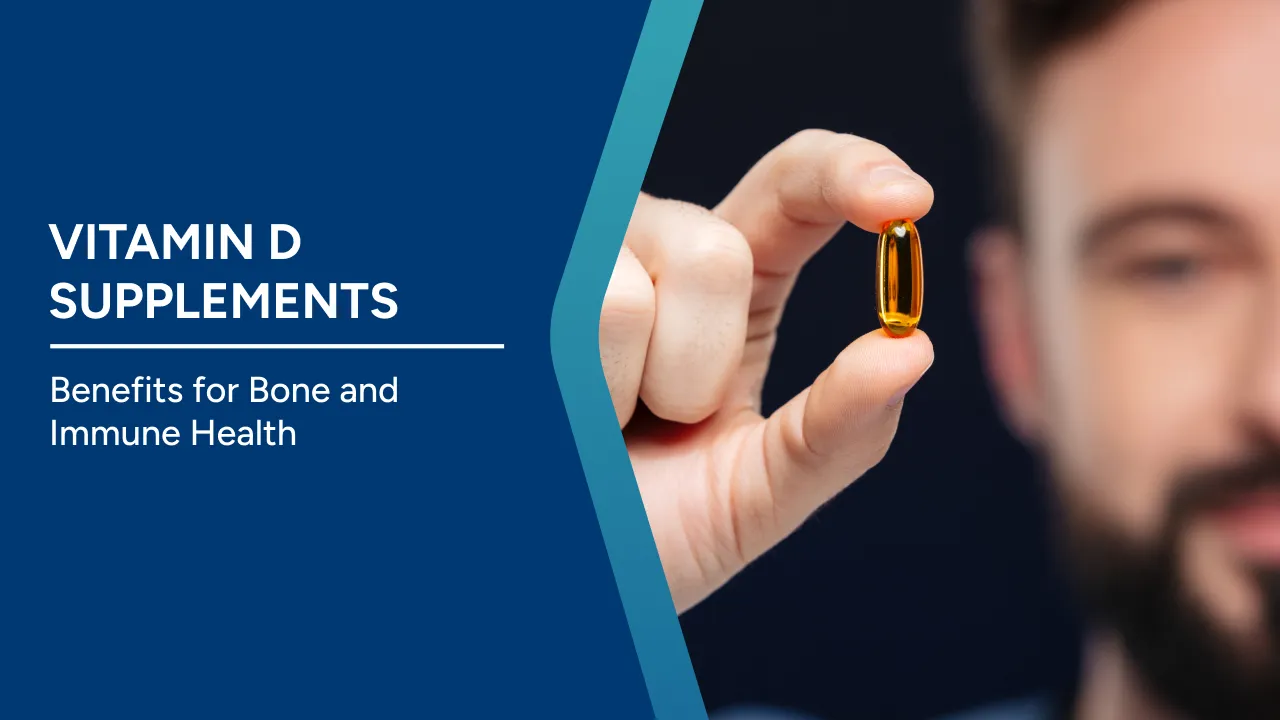
Call Us+91 954 002 5025Vitamin D Supplements: Benefits for Bone and Immune Health
By Dr. Rajinder Kumar Singal in Internal Medicine
Sep 11 , 2026 | 10 min read

Vitamin D supplements are nutritional products designed to help maintain healthy levels of vitamin D in the body. Vitamin D is an essential nutrient that supports bone strength, immune function, and overall wellbeing. While the body naturally produces vitamin D when exposed to sunlight, many people do not get enough due to limited sun exposure, dietary habits, or certain medical conditions. Understanding the key Vitamin D benefits - and knowing when supplementation genuinely helps - can make it easier to protect your bone and immune health over the long term.
At BLK-Max Super Speciality Hospital, specialists often highlight the importance of maintaining healthy vitamin D levels for both preventive and long-term healthcare.
Vitamin D3 vs Vitamin D2: What Is the Difference?
Vitamin D supplements are commonly available in two forms: vitamin D2 and vitamin D3.
Vitamin D2 is usually derived from plant sources, while vitamin D3 is generally sourced from animal products or made in the skin after sun exposure and is considered more effective at raising vitamin D levels in the blood. Both forms help address deficiency, but vitamin D3 is often preferred for long-term supplementation.
How Vitamin D Supplements Work in the Body
Vitamin D helps the body absorb calcium and phosphorus from food. These minerals are essential for building and maintaining strong bones and teeth. It also supports proper muscle function, nerve signalling, and immune system regulation.
Natural Sources vs Vitamin D Supplements
Natural sources of vitamin D include sunlight exposure, fatty fish, egg yolks, and fortified foods. However, lifestyle factors and limited dietary intake often make it difficult to achieve adequate levels naturally. In such cases, vitamin D supplements may help bridge the gap.
Why Vitamin D Supplements are Important
Role in Overall Health Maintenance
Vitamin D plays a major role in maintaining bone health, supporting immunity, and supporting muscle strength. It also contributes to overall metabolic and cardiovascular health. These wide-ranging Vitamin D benefits are one reason doctors may check levels even in people who don't have obvious symptoms.
Why Deficiency is So Common
Vitamin D deficiency has become increasingly common due to indoor lifestyles, air pollution, sunscreen use, and limited exposure to sunlight. Older adults and people with darker skin tones may also have reduced vitamin D production.
Who is Most at Risk of Deficiency
Certain groups are more likely to develop vitamin D deficiency, including:
- Older adults
- Pregnant and breastfeeding women
- People with obesity
- Individuals with digestive disorders
- People with limited sunlight exposure
Vitamin D for Bone Health: Key Benefits of Supplementation
Improves Calcium Absorption
One of the primary functions of vitamin D is helping the body absorb calcium efficiently. Without sufficient vitamin D, calcium absorption decreases significantly, increasing the risk of weak bones.
Strengthens Bones and Teeth
Healthy vitamin D levels support bone mineralisation, which keeps bones and teeth strong and resilient throughout life.
Prevents Osteoporosis and Bone Weakness
Vitamin D deficiency may contribute to osteoporosis, osteomalacia, and brittle bones. Adequate intake of vitamin D supplements can help reduce bone loss, particularly in older adults. If you have already been diagnosed with low bone density, our osteoporosis diagnosis and treatment team can help you build a complete bone-health plan.
Reduces Risk of Fractures
Strong bones are less likely to fracture during falls or injuries. The evidence here is mixed: some trials show that combining vitamin D with calcium modestly lowers the risk of hip and other fractures, particularly in older adults who are deficient or living in care facilities, while several large studies have found little benefit for otherwise healthy adults who are not deficient. This is why a blood test - rather than assumption - is the best way to know whether supplementation is likely to help your bones.
Read more on hip fracture prevention and care.
Vitamin D for Immune Health: Key Benefits
Strengthens Immune System Response
Vitamin D helps regulate immune cells and supports the body’s natural defence mechanisms against infections.
Helps Fight Infections
A large 2017 analysis pooling data from 25 clinical trials found that vitamin D supplementation modestly reduced the overall risk of acute respiratory infections, with the clearest benefit seen in people who were genuinely vitamin D deficient to begin with. Studies indicate that maintaining optimal vitamin D levels may help reduce the risk of respiratory infections and seasonal illnesses, though supplementation is not a substitute for vaccination or other routine preventive care.
Role in Reducing Inflammation
Vitamin D has anti-inflammatory properties that may help regulate excessive immune responses and support overall immune balance.
Support During Seasonal Illnesses
During colder months or periods of limited sunlight, vitamin D supplements may help maintain immune function and reduce susceptibility to common infections.
Other Health Benefits of Vitamin D Supplements
Muscle Strength and Function
Vitamin D supports muscle contraction and coordination. Low levels may contribute to muscle weakness and fatigue.
Mood Regulation and Mental Health
Some studies suggest a connection between vitamin D deficiency and low mood or seasonal affective disorder and a 2013 systematic review found that people with depression tend to have lower vitamin D levels than people without it. This research shows an association, not proof that low vitamin D causes low mood - supplements should never replace professional mental health care. Maintaining healthy levels may contribute to emotional wellbeing.
Support for Heart Health
Vitamin D may support cardiovascular function by helping regulate blood pressure and inflammation levels.
Role in Chronic Disease Prevention
Emerging research suggests that healthy vitamin D levels may help reduce the risk of certain chronic conditions, though more studies are ongoing.
Explore our blogs - Vitamin D Deficiency Diseases and Causes of Depression.
Signs You May Need Vitamin D Supplements
Fatigue and Low Energy
Persistent tiredness or low energy levels can sometimes be associated with vitamin D deficiency.
Bone and Joint Pain
Bone discomfort, back pain, or muscle aches may indicate low vitamin D levels.
Frequent Infections
Repeated illnesses or slow recovery from infections may suggest weakened immune function linked to a deficiency.
Hair Loss or Mood Changes
Hair thinning and mood disturbances can also occur in some individuals with low vitamin D levels.
If any of these signs sound familiar, a simple blood test - available as part of a preventive health check-up - can confirm whether your vitamin D levels are actually low before you start supplementing.
Learn about - Signs of Low Vitamin D Levels and Types of Blood Tests.
How to Take Vitamin D Supplements Effectively
Best Time to Take Vitamin D Supplements
Vitamin D supplements are often best taken with meals, especially those containing healthy fats, to improve absorption.
With or Without Food?
Since vitamin D is fat-soluble, taking it with food generally enhances absorption compared to taking it on an empty stomach.
Recommended Dosage Guidelines
The appropriate dosage varies depending on age, health condition, and the severity of the deficiency. A doctor may recommend blood tests to determine the correct dosage.
Combining with Calcium for Better Results
Vitamin D and calcium often work together to support bone health. In some cases, healthcare professionals may recommend taking both supplements together. A visit to our Nutrition and Health specialists can help you plan a diet and supplement routine that meets your calcium needs.
Vitamin D Deficiency and Its Impact
Effects on Bone Health
Deficiency can weaken bones, increase fracture risk, and contribute to conditions such as rickets in children and osteoporosis in adults.
Effects on the Immune System
Low vitamin D levels may impair immune function and increase vulnerability to infections.
Long-Term Health Risks
Untreated vitamin D deficiency may contribute to long-term complications involving bones, muscles, and general health.
At BLK-Max Super Speciality Hospital, our internal medicine specialists may recommend diagnostic evaluation and personalised treatment plans for individuals experiencing symptoms linked to deficiency.
Safety and Side Effects of Vitamin D Supplements
When taken appropriately, vitamin D supplements are generally safe. Mild side effects may include nausea, constipation, or stomach discomfort in some individuals.
Vitamin D Toxicity Risks
Excessive intake of vitamin D can lead to toxicity, causing high calcium levels, kidney issues, nausea, and confusion. Toxicity is rare and almost always the result of taking very high-dose supplements over a long period - not from sunlight or food. Blood levels above roughly 150 ng/mL (375 nmol/L) are generally considered potentially harmful. It is important not to exceed recommended doses without medical supervision.
Who Should Be Careful Before Taking Supplements
People with kidney disease, certain hormonal disorders, or those taking specific medications should consult a healthcare professional before starting supplementation. BLK-Max's own internal medicine specialists have previously cautioned against self-prescribing high-dose Vitamin D for immunity without testing - see why a prescription matters before high-dose Vitamin D.
Final Thoughts
Vitamin D supplements play an important role in maintaining bone strength, immune health, muscle function, and overall wellbeing. Deficiency is common and can affect people of all ages, especially those with limited sunlight exposure or dietary intake.
If you experience symptoms such as persistent fatigue, bone pain, muscle weakness, or frequent infections, it may be advisable to seek medical guidance. At BLK-Max Super Speciality Hospital, healthcare professionals can help assess your vitamin D levels through a simple blood test and recommend suitable treatment options personalised to individual health needs. This article is for general awareness only and is not a substitute for professional medical advice.
Disclaimer: This article is intended for general health information and does not replace personalised medical advice. Please consult a qualified doctor before starting, changing, or stopping any Vitamin D supplement, especially if you have an existing health condition or take other medication.
Frequently Asked Questions
1. What Is the Difference Between Vitamin D3 and Vitamin D2?
Vitamin D2 (ergocalciferol) comes mainly from plant and fortified-food sources, while Vitamin D3 (cholecalciferol) comes from animal sources or is made by the skin in sunlight. Research comparing the two consistently finds that D3 raises and sustains blood vitamin D levels more effectively than D2, which is why D3 is generally the preferred form for supplementation.
2. Can Vitamin D Supplements Boost Immunity?
Vitamin D supports immune function and may help the body respond more effectively to infections, although it should not replace a balanced diet or medical treatment.
3. Can I Take Vitamin D Supplements Daily, and Is It Safe?
Yes, daily supplementation at a doctor-recommended dose is generally considered safe for most adults. Problems are almost always linked to very high, unsupervised doses taken over a long period, not to typical daily maintenance doses.
4. Are Supplements Better Than Sunlight?
Sunlight remains a natural source of vitamin D, but supplements can be beneficial when adequate sun exposure is not possible. Neither is automatically "better" - the right choice depends on your skin type, climate, lifestyle, and blood test results.
5. What Is a Healthy Vitamin D Level, and How Is It Tested?
A simple blood test measuring 25-hydroxyvitamin D is the standard way to check your vitamin D status; your doctor will interpret the result against age- and health-specific reference ranges rather than a single universal number. Testing before supplementing helps avoid both under- and over-treatment.
6. Can Vitamin D Supplements Help With Bone or Joint Pain?
Vitamin D supplements may help if the pain is linked to a genuine deficiency, since low vitamin D can contribute to bone discomfort and muscle aches. They are not a general painkiller, so persistent bone or joint pain should still be evaluated by a doctor.
7. Who Should Avoid Vitamin D Supplements Without Medical Advice?
People with kidney disease, certain hormonal disorders, or those on specific medications should speak to a doctor before starting Vitamin D supplements, since their dosage needs and risks can differ from the general population.
References
[1] National Institutes of Health, Office of Dietary Supplements. (n.d.). Vitamin D: Fact sheet for consumers. U.S. Department of Health and Human Services. Retrieved September 1, 2026, from https://ods.od.nih.gov/factsheets/VitaminD-Consumer/
[2] Tripkovic, L., Lambert, H., Hart, K., Smith, C. P., Bucca, G., Penson, S., Chope, G., Hyppönen, E., Berry, J., Vieth, R., & Lanham-New, S. (2012). Comparison of vitamin D2 and vitamin D3 supplementation in raising serum 25-hydroxyvitamin D status: A systematic review and meta-analysis. The American Journal of Clinical Nutrition, 95(6), 1357–1364. https://doi.org/10.3945/ajcn.111.031070
[3] Chakhtoura, M., Bacha, D. S., Gharios, C., Ajjour, S., Assaad, M., Jabbour, Y., Kahale, F., Bassatne, A., Antoun, S., Akl, E. A., Bouillon, R., Lips, P., Ebeling, P. R., & El-Hajj Fuleihan, G. (2022). Vitamin D supplementation and fractures in adults: A systematic umbrella review of meta-analyses of controlled trials. The Journal of Clinical Endocrinology & Metabolism, 107(3), 882–898. https://doi.org/10.1210/clinem/dgab742
[4] Martineau, A. R., Jolliffe, D. A., Hooper, R. L., Greenberg, L., Aloia, J. F., Bergman, P., Dubnov-Raz, G., Esposito, S., Ganmaa, D., Ginde, A. A., Goodall, E. C., Grant, C. C., Griffiths, C. J., Janssens, W., Laaksi, I., Manaseki-Holland, S., Mauger, D., Murdoch, D. R., Neale, R., … Camargo, C. A. (2017). Vitamin D supplementation to prevent acute respiratory tract infections: Systematic review and meta-analysis of individual participant data. BMJ, 356, Article i6583. https://doi.org/10.1136/bmj.i6583
[5] Anglin, R. E., Samaan, Z., Walter, S. D., & McDonald, S. D. (2013). Vitamin D deficiency and depression in adults: Systematic review and meta-analysis. The British Journal of Psychiatry, 202(2), 100–107. https://doi.org/10.1192/bjp.bp.111.106666

Written and Verified by:

Related Blogs

Medical Expert Team
Jul 18 , 2019 | 6 min read

Dr. Rajinder Kumar Singal In Internal Medicine
Sep 22 , 2026 | 7 min read

Dr. Rajinder Kumar Singal In Internal Medicine
Mar 14 , 2024 | 6 min read
Blogs by Doctor
Hyperthermia: What It Is and How It Affects the Body
Dr. Rajinder Kumar Singal In Internal Medicine
Sep 22 , 2026 | 7 min read
Battling the Sniffles: Tips for Preventing the Common Cold
Dr. Rajinder Kumar Singal In Internal Medicine
Mar 14 , 2024 | 6 min read
Signs of Low Vitamin D Levels You Should Not Ignore
Dr. Rajinder Kumar Singal In Internal Medicine
Jul 30 , 2026 | 15 min read
Most read Blogs


Related Blogs
Medical Expert Team
Jul 18 , 2019 | 6 min read
Dr. Rajinder Kumar Singal In Internal Medicine
Sep 22 , 2026 | 7 min read
Dr. Rajinder Kumar Singal In Internal Medicine
Mar 14 , 2024 | 6 min read
Blogs by Doctor
Hyperthermia: What It Is and How It Affects the Body
Dr. Rajinder Kumar Singal In Internal Medicine
Sep 22 , 2026 | 7 min read
Battling the Sniffles: Tips for Preventing the Common Cold
Dr. Rajinder Kumar Singal In Internal Medicine
Mar 14 , 2024 | 6 min read
Signs of Low Vitamin D Levels You Should Not Ignore
Dr. Rajinder Kumar Singal In Internal Medicine
Jul 30 , 2026 | 15 min read
Most read Blogs
