 +91 954 002 5025 (24/7)

To Book an Appointment
Call Us+91 954 002 5025To Book an Appointment
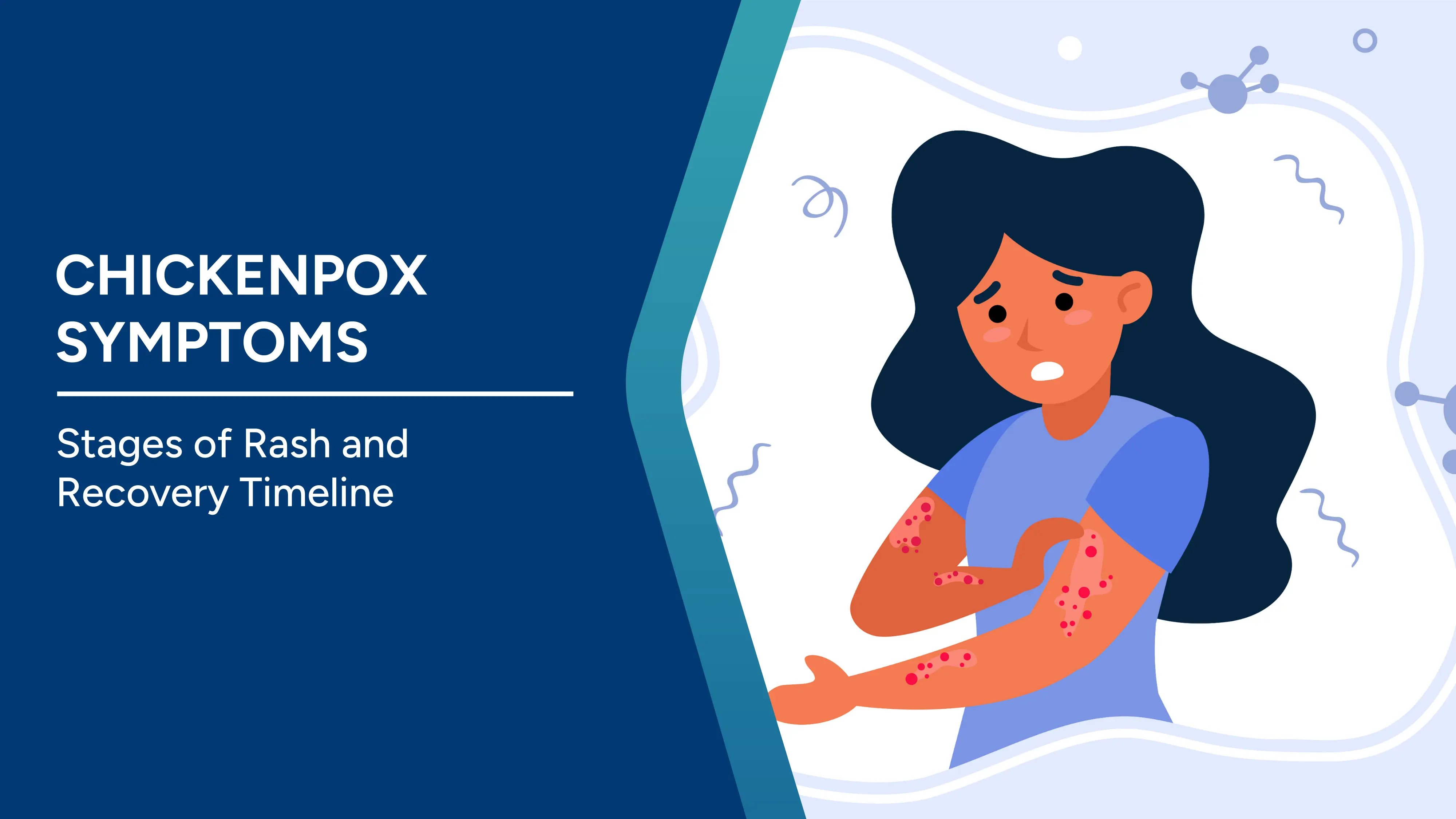
Call Us+91 954 002 5025Chickenpox Symptoms: Stages of Rash and Recovery Timeline
By Dr. Rajinder Kumar Singal in Internal Medicine
Aug 05 , 2026 | 8 min read

Chickenpox is a highly contagious viral infection that primarily affects children but can also occur in adults who have not been vaccinated or who have been previously infected. While many cases are mild, chickenpox can sometimes lead to discomfort and complications if not managed properly. Recognising the symptoms early helps in timely care, reducing the risk of infection spread and complications. Children, unvaccinated adults, pregnant women, and immunocompromised individuals are at highest risk for severe illness.
What Is Chickenpox?
Chickenpox is an infectious disease caused by the varicella-zoster virus (VZV). It spreads readily from person to person via airborne droplets from coughing and sneezing, or direct contact with characteristic fluid-filled blisters.
Clinical Presentation Variability:
In mild cases, symptoms are limited to low-grade fever and a localized skin rash that typically resolves spontaneously within 1-2 weeks. Severe cases, more common in adults and immunocompromised patients, may involve high fever (>38.5°C), widespread rash covering >500 lesions, and serious complications affecting the lungs (varicella pneumonia) or central nervous system (encephalitis).
Read more about - Symptoms of Pneumonia and symptoms of Encephalitis.
Early Symptoms of Chickenpox
Initial Signs
Before the rash appears, early symptoms may feel like a general viral illness, such as:
These symptoms usually appear 1 to 2 days before the rash and are often more noticeable in adults, who may experience prolonged systemic symptoms.
Learn about - Home Remedies for Headache and Home Remedies for Cough.
Prodromal Stage
The prodromal stage refers to the early phase before visible skin changes appear. During this period, the virus is replicating actively in the body, and systemic symptoms gradually intensify. This phase typically lasts 24 to 48 hours before the characteristic rash develops, though duration can vary.
Stages of Chickenpox Rash
Stage 1: Red Macules/Papules (Day 1-2)
The rash usually begins as small red raised spots (macules or papules) on the chest, back, and face, then spreads centripetally (toward the center) to the trunk and extremities. These initial lesions resemble insect bites and typically appear in clusters on warm, moist areas of skin. The rash generally appears 10-21 days after viral exposure (incubation period).
Stage 2: Vesicles/Fluid-Filled Blisters (Day 3-5)
Within 24 hours, red spots transform into itchy, fluid-filled blisters (vesicles) containing infectious viral particles. This is the most uncomfortable and highly contagious stage, as itching can be intense and skin barrier breakdown creates infection risk . Characteristic "crops" or waves of new blisters may continue appearing for 3-7 days, resulting in simultaneous presence of lesions at different stages (macules, vesicles, and crusts). This stage generally lasts 3 to 5 days.
Stage 3: Crusting and Scabbing (Day 5-10)
Vesicles gradually lose fluid, flatten, and crust over with characteristic dark brown scabs. These scabs represent healing and are no longer infectious. Avoiding scratching is critical to prevent two serious complications: permanent pitting scars (post-inflammatory scarring) and secondary bacterial skin infections (typically Staphylococcus aureus or Streptococcus pyogenes). This final stage may last 5 to 10 days, after which scabs shed naturally without intervention.
Recovery Timeline of Chickenpox
The complete course of chickenpox typically lasts 7 to 14 days from rash onset, with total illness duration of 10-21 days when including the prodromal period. Fever and localized discomfort decrease as the rash transitions from vesicular to crusty stage.
Recovery speed is influenced by multiple factors:
Children typically recover completely within 7-10 days with minimal scarring; adults and immunocompromised individuals may require 14-21 days or longer and face higher complication risks.
Complications of Chickenpox
Although the majority of chickenpox cases (>90%) resolve without serious complications, immunocompromised and adult populations face increased risk:
Common Complications:
Higher-Risk Populations:
Severe Complication Requiring Hospitalization:
Secondary bacterial sepsis, hemorrhagic lesions, or organ dysfunction warrant immediate hospital admission.
Clinical Recommendation from BLK Max Hospital:
Our Internal Medicine team advises close monitoring and early medical evaluation for high-risk individuals to detect complications early and initiate appropriate antiviral therapy.
Treatment and Symptom Relief for Chickenpox
Supportive Home Care (Recommended for mild-moderate cases)
For uncomplicated chickenpox, symptom-directed care focuses on comfort, prevention of complications, and shortening disease duration:
Skin Care & Itching Management:
Systemic Supportive Care:
- <li
- : drink 2-3 liters of fluids daily to support immune function (newly added with specificity)
Medical Treatment (Indicated for moderate-severe cases or high-risk patients)
Antiviral Therapy:
Symptom Management:
Infection Prevention:
When to Seek Medical Care at BLK Max Hospital:
Immediate medical evaluation is necessary if any of the following occurs:
- <li
- >38.5°C persisting beyond 4 days or recurring after improvement <li
- : spreading warmth, redness, pus-filled lesions (pustules), or increasing pain <li
- :
- ,
- , or persistent cough suggesting varicella pneumonia <li
- : severe headache, neck stiffness, confusion, or lethargy suggesting encephalitis
Our specialists provide personalized chickenpox treatment plans based on individual age, disease severity, comorbidities, and risk factors.
Prevention of Chickenpox
The most effective strategy to prevent chickenpox is vaccination.
Vaccination Protocol:
- <li
- - Live attenuated or inactivated formulations <li
- : Two doses at ages 12-15 months and 4-6 years (or 2 doses, 4 weeks apart, for those vaccinated after age 13) <li
- : Recommended for all non-immune adults, especially healthcare workers, pregnant women planning conception (before pregnancy), and immunocompromised individuals requiring special formulations <li
- : 90-98% protection against infection; 95-98% protection against severe disease
Post-Exposure Prophylaxis (PEP):
Non-Vaccination Prevention Strategies:
Clinical Note: If you have questions about vaccination suitability for specific medical conditions, BLK Max Hospital's Internal Medicine specialists can provide personalized immunization counseling.
Conclusion
Chickenpox follows a predictable clinical progression: prodromal flu-like symptoms → sequential rash stages (macules → vesicles → crusts) → gradual recovery over 7-14 days. Early symptom recognition, appropriate supportive care, prevention of skin trauma through scratching, and prompt medical evaluation for complications are essential for optimal outcomes.
Vaccination remains the most reliable and evidence-based strategy to prevent chickenpox infection and its potential complications, with effectiveness rates exceeding 90%.
Frequently Asked Questions
1. How long does chickenpox last?
Chickenpox usually lasts 7 to 14 days. In most children, symptoms are mild and improve within a week. Adults and people with weaker immunity may take longer to recover, especially if complications develop.
2. Can adults get chickenpox?
Yes. Adults who were not vaccinated or never had chickenpox can get infected. In adults, chickenpox is often associated with higher fevers, more widespread rash, and a greater risk of complications than in children.
3. Is chickenpox contagious?
Yes, chickenpox is highly contagious. It can spread from 1–2 days before the rash appears until all blisters have dried and formed scabs. Close contact, coughing, sneezing, or touching blister fluid can spread the infection.
4. Can chickenpox cause long-term effects?
Most people recover completely without lasting issues. However, scarring, skin infections, or pneumonia may occur in severe cases. The virus can also remain dormant and reactivate later in life as shingles.
5. When should I see a doctor for chickenpox?
You should seek medical advice if there is a high or persistent fever, breathing difficulty, infected blisters, severe headache, confusion, or if the patient is pregnant, an adult, or has a weakened immune system. Early medical care helps prevent complications.
6. What is the prodromal phase of chickenpox?
The prodromal phase is the 24-48 hour period BEFORE the rash appears, when patients have flu-like symptoms but no visible skin lesions. Symptoms during this phase include fever, fatigue, headache, body aches, and sometimes sore throat.
This is the most contagious period yet most commonly missed, because patients and even healthcare providers may not yet suspect chickenpox—they assume simple flu or common cold. Patients are actively shedding virus during the prodrome via respiratory droplets, making this period critical for disease transmission. Recognizing prodromal symptoms in recently-exposed individuals can enable early quarantine and possible post-exposure prophylaxis.
7. What are the stages of chickenpox rash?
Chickenpox rash progresses through three distinct stages:
Stage 1: Red Macules/Papules (Days 1-2)
Non-itchy initially
Stage 2: Vesicles/Fluid-Filled Blisters (Days 3-5)
Stage 3: Crusts/Scabs (Days 5-10)
Total rash duration: typically 7-10 days from first lesion to complete crusting.
8. Is chickenpox vaccination safe?
Yes, varicella vaccination is safe and highly effective. Approved vaccines include:
Live Attenuated Varicella (VAR) Vaccine:
Inactivated Varicella Vaccine:
Effectiveness: 90-98% protection against infection; 95-98% protection against severe disease.
Important Note: Vaccination during pregnancy is contraindicated (live vaccine); however, non-pregnant women of childbearing age should be vaccinated before conception.
9. What are home remedies for chickenpox itching?
Effective non-pharmacological and pharmacological itch management strategies:
Topical Applications:
- <li
- : Apply 2-3 times daily for soothing effect <li
- : Mix 1-2 cups pure colloidal oatmeal in lukewarm water; soak 15-20 minutes <li
- : For localized inflammation (consult pharmacist) <li
- : Unscented moisturizers applied to damp skin
Environmental & Behavioral:
- <li
- : Apply to affected areas for 10-15 minutes <li
- : Minimize friction and heat <li
- : Reduces damage from unconscious scratching <li
- : Especially during sleep
Systemic Support:
- <li
- : Cetirizine 10mg or hydroxyzine 25-50mg for intense pruritus (
- ) <li
- : Avoid overheating, which worsens itching
What to AVOID:
10. Can I go to work or school with chickenpox?
No. Infected individuals should remain home to prevent transmission.
Return to Work/School Guidelines:
- <li
- : 5 days after rash onset <li
- : Until ALL blisters have completely crusted and dried (typically 7-10 days) <li
- : May require longer exclusion or clearance from occupational health
Rationale: Even coughing without visible rash is highly contagious; airborne transmission is possible. Individuals with weakened immunity or pregnant women exposed to uncrusted lesions face serious risk of severe varicella or congenital infection.
Employers and schools should request written clearance from healthcare providers before return, especially if complications occurred.
Medical Disclaimer: This article provides educational information about chickenpox symptoms and general recovery timelines. It is not a substitute for professional medical advice, diagnosis, or treatment. If you suspect chickenpox infection or experience severe symptoms, please consult a qualified healthcare provider immediately. For emergency situations, contact emergency services. At BLK Max Hospital, our Internal Medicine specialists are available for expert evaluation and personalized treatment plans.
REFERENCES
[1] American Academy of Pediatrics. (2021). Varicella-zoster virus infections. In Red Book: 2021-2024 Report of the Committee on Infectious Diseases (34th ed.). American Academy of Pediatrics.
[2] CDC - Centers for Disease Control and Prevention. (2023). Chickenpox (Varicella): Clinical features. U.S. Department of Health & Human Services. https://www.cdc.gov/chickenpox/index.html
[3] Oxman, M. N. (2021). Varicella and herpes zoster: Insights and implications from recent immunological studies. Journal of Clinical Virology, 85, 12-17. https://doi.org/10.1016/j.jcv.2020.103677
[4] Gershon, A. A., Breuer, J., Cohen, J. I., Cohrs, R. J., Gershon, M. D., Gilden, D., ... & Zerboni, L. (2023). Varicella zoster virus infection. Nature Reviews Disease Primers, 41(1), 1-24. https://doi.org/10.1038/s41572-023-00437-x

Written and Verified by:

Related Blogs

Medical Expert Team
Jul 18 , 2019 | 6 min read
Dr. Rajinder Kumar Singal In Internal Medicine
Sep 22 , 2026 | 7 min read

Dr. Rajinder Kumar Singal In Internal Medicine
Mar 14 , 2024 | 6 min read
Blogs by Doctor
Hyperthermia: What It Is and How It Affects the Body
Dr. Rajinder Kumar Singal In Internal Medicine
Sep 22 , 2026 | 7 min read
Battling the Sniffles: Tips for Preventing the Common Cold
Dr. Rajinder Kumar Singal In Internal Medicine
Mar 14 , 2024 | 6 min read

Signs of Low Vitamin D Levels You Should Not Ignore
Dr. Rajinder Kumar Singal In Internal Medicine
Jul 30 , 2026 | 15 min read
Most read Blogs


Related Blogs
Medical Expert Team
Jul 18 , 2019 | 6 min read
Dr. Rajinder Kumar Singal In Internal Medicine
Sep 22 , 2026 | 7 min read
Dr. Rajinder Kumar Singal In Internal Medicine
Mar 14 , 2024 | 6 min read
Blogs by Doctor
Hyperthermia: What It Is and How It Affects the Body
Dr. Rajinder Kumar Singal In Internal Medicine
Sep 22 , 2026 | 7 min read
Battling the Sniffles: Tips for Preventing the Common Cold
Dr. Rajinder Kumar Singal In Internal Medicine
Mar 14 , 2024 | 6 min read
Signs of Low Vitamin D Levels You Should Not Ignore
Dr. Rajinder Kumar Singal In Internal Medicine
Jul 30 , 2026 | 15 min read
Most read Blogs
