 +91 954 002 5025 (24/7)

To Book an Appointment
Call Us+91 954 002 5025To Book an Appointment
Call Us+91 954 002 5025Balanced Diet for a Healthy Lifestyle: What to Eat and Avoid
By Dr. Rajinder Kumar Singal in Internal Medicine
Aug 05 , 2026 | 8 min read
2

A balanced diet is key to a healthy lifestyle, and it doesn’t have to be complicated. It’s about making better choices every day, like adding more veggies to your plate, cutting back on fried foods, and getting the right mix of protein, carbs, and healthy fats. Whether you’re cooking at home or eating out, small changes can make a big difference in how you feel. It’s not about eliminating foods you love-it’s about balance. Let’s explore what is a balanced diet, what to eat more of and what to avoid, so you can stay healthy and feel great every day.
What is a Balanced Diet?
Your body runs like a system. It needs a bit of everything, and only one type of food can’t give you all of that. That's why variety matters.
A balanced diet gives your body the fuel it needs to function well. Not just to survive, but to stay active, your body needs the right mix of foods from all the major groups: carbs, proteins, fats, fibre, vitamins, minerals, and water.
Key Components of a Balanced Diet
Macronutrients like carbs, proteins, and fats are your body’s fuel, but not all work the same way. It’s about picking the better kind:
1. Carbs
Opt for whole grains, brown rice, oats, and fruits. They provide you with sustained energy and make you feel full for longer, as opposed to sugary or processed carbs that burn out quickly. Avoid too many processed carbs such as white bread, pastries, and sweets.
2. Proteins
Lean meats like chicken, fish, eggs, lentils, and paneer are great options. Plant-based choices like chickpeas, tofu, and quinoa are also rich in protein and fibre.
3. Fats
Healthy fats come from nuts, seeds, avocados, and olive oil. Avoid trans fats and overly processed oils found in fried and packaged foods.
4. Micronutrients
Micronutrients like vitamins and minerals keep your body running smoothly, from building immunity to building strong bones and keeping your energy up. You’ll find them in everyday foods:
- Vitamin C: Oranges, guavas, amla, bell peppers
- Vitamin D: Fortified milk, egg yolks, and a bit of sunshine
- Iron: Spinach, lentils, beans, jaggery
- Calcium: Dairy, ragi, tofu, leafy greens
- Zinc & Magnesium: Seeds, nuts, whole grains, legumes
5. Hydration
Water supports digestion, circulation, temperature control, and even brain function. Nothing in your body works properly without enough water. Foods like fruits, cucumbers, and soups also add to your hydration.
6. Fibre
It keeps your digestive system moving, prevents constipation, and feeds the good bacteria in your gut. Found in fruits, vegetables, legumes, and whole grains. Fibre plays a big role in keeping your body balanced from the inside out.
Check out What is a DASH Diet and Constituents of a Healthy Diet.
Health Benefits of a Balanced Diet
Eating a mix of the right foods regularly can do more than just help you look fit. Here’s what it actually helps with:
- Better energy and immunity: No more afternoon crashes or constant colds.
- Heart health and weight control: Eat less fried food and more fresh meals; your heart will thank you.
- Digestive health: Regular fibre and water are equal to fewer stomach issues.
- Mental focus: What you eat affects how you think and feel. Omega-3s, B vitamins, and hydration help with mood and clarity.
Recommended: Diet Chart for Weight Loss and Keto Diet for Weight Loss.
Foods to Include in a Balanced Diet
Before we get into what to cut back on, let’s look at what should be on your plateto maintain a balanced diet.
- Healthy carbs: Brown rice, whole wheat roti, oats, poha, fruits, and vegetables. These give energy that lasts.
- Proteins: Eggs, chicken, fish, paneer, dal, rajma, chana, and tofu. Try mixing veg and non-veg across the week.
- Fats: Nuts, seeds, ghee, olive oil, and avocados. Avoid deep-fried food, but don’t fear fat.
- Dairy & alternatives: Curd, milk, buttermilk, or fortified plant-based options like soy milk.
- Superfoods: Indian superfoods like amla, haldi, curry leaves, and drumsticks are often underrated, but they pack a serious nutritional punch. Amla is rich in Vitamin C and boosts immunity, haldi (turmeric) has anti-inflammatory properties, curry leaves support digestion and hair health, and drumstick (moringa) is loaded with iron, calcium, and antioxidants.
Foods to Avoid or Limit for Healthy Eating
Not every food that’s tasty is necessarily good for your body, and not every “bad” food is off-limits forever either. But some items just don’t offer much in terms of nutrition.
It’s not about cutting them out completely but keeping them in check:
- Sugary and packaged foods: Sweets, biscuits, chips, and soda spike energy and crash it later.
- Fried and fast food: The occasional samosa or junk food cheat day is fine. Just try not to make it a routine.
- Too much salt: Eating too much processed foods, sauces, and even pickles on a regular basis adds up.
- Sugary drinks: Fruit juices, sodas, and flavoured milk. Water or unsweetened drinks are better alternatives.
Implementing a Balanced Diet Chart for Different Needs
Different people have different nutritional needs. Here’s a basic approach that you can maintain for the following concerns:
- Weight loss: Smaller portions, fewer calories, more fibre. Fill up with veggies, proteins, and whole grains.
- Muscle gain: More protein (chicken, paneer, soya, eggs), good carbs, and strength-training support.
- Diabetes: Choose low-GI foods like oats, barley, and green veggies. Eat on time.
- Heart health: Less saturated fat, more omega-3s, whole grains, and fruits.
- Kids and seniors: Kids need more calcium and energy; seniors need softer, easy-to-digest food with high fibre and vitamins.
Your meal plan needs to match your lifestyle and your body’s needs. At BLK-Max Super Speciality Hospital, we help you customise your diets based on your health goals, medical conditions, and personal preferences. Whether it’s managing blood sugar, supporting heart health, or planning meals for recovery, we guide you with simple, practical advice that works in daily life.
Learn more about a Heart Diet Chart and Diet After Heart Bypass Surgery.
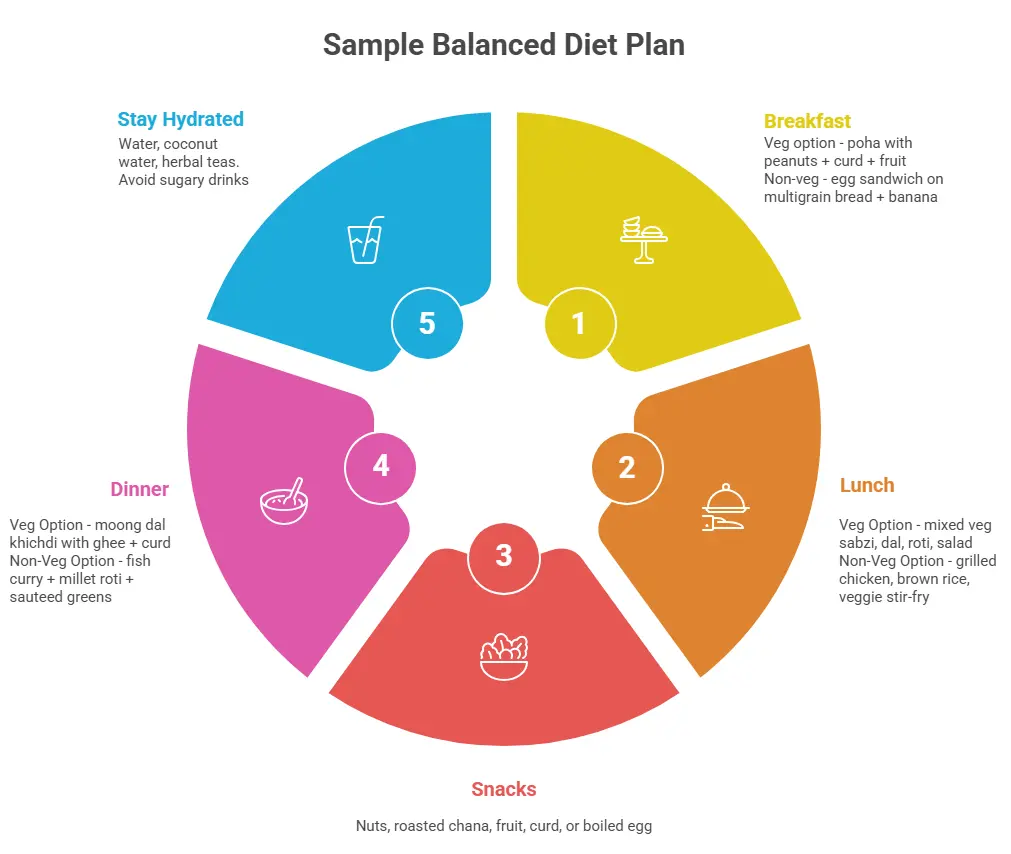
Sample Balanced Diet Plan
Here’s a rough idea of how to plan your meals. You can tweak it based on your taste and schedule.
- Breakfast: Veg option- poha with peanuts + curd + fruit. Non-veg- egg sandwich on multigrain bread + banana.
- Lunch: Veg- mixed veg sabzi, dal, roti, salad. Non-veg- grilled chicken, brown rice, veggie stir-fry.
- Snacks: Nuts, roasted chana, fruit, curd, or boiled egg.
- Dinner: Veg- moong dal khichdi with ghee + curd. Non-veg- fish curry + millet roti + sauteed greens.
- Hydration: Water, coconut water, herbal teas. Avoid sugary drinks.
View comprehensive Whole Grains Benefits and Super Foods For Women.
7-Day Healthy Balanced Diet Chart
| Day | Breakfast (8:00 AM) | Mid-Morning Snack (11:00 AM) | Lunch (1:30 PM) | Evening Snack (4:30 PM) | Dinner (8:00 PM) |
|
Mon |
Poha with peanuts and vegetables + Curd |
1 Apple |
Dal, Mixed Veg Sabzi, 2 Roti, Salad |
Roasted Chana |
Moong Dal Khichdi with Ghee + Curd |
|
Tue |
Oatmeal with nuts and seeds |
1 Orange |
Rajma, Brown Rice, Salad |
Handful of Almonds |
Grilled Fish/Paneer, Sauteed Greens, Millet Roti |
|
Wed |
Idli with Sambar |
1 Guava |
Dal, Palak Paneer, 2 Roti, Salad |
Buttermilk |
Vegetable Soup, Grilled Chicken or Tofu |
|
Thu |
Egg Sandwich on multigrain bread |
Handful of Walnuts |
Chickpea Curry (Chole), Brown Rice, Salad |
Sprouts Salad |
Dal, Lauki Sabzi, 2 Roti, Salad |
|
Fri |
Veg Upma |
1 Banana |
Fish Curry/Paneer Curry, Brown Rice, Salad |
Green Tea |
Millet Roti, Mixed Veg Sabzi, Dal |
|
Sat |
Besan Chilla with mint chutney |
1 Pear |
Dal, Mixed Veg Sabzi, 2 Roti, Salad |
Roasted Makhana |
Chicken Curry or Soya Chunk Curry, Salad |
|
Sun |
Idli/Dosa with Sambar |
Coconut Water |
Dal Makhani (limited ghee), 2 Roti, Salad |
Tea/Coffee (No Sugar) |
Light Moong Dal, Roti, Salad |
Note:
- Hydration: Drink at least 2-3 liters of water throughout the day.
- Portion Control: Eat until you are satisfied, not overly stuffed.
- Customization: If you have specific medical conditions like diabetes or heart issues, please consult with our dietitians at BLK-Max Super Speciality Hospital for a personalized plan.
Read: Dietitian Chart for a Healthy Diet and Keto to Mediterranean Diet Benefits.
Tips for Maintaining a Balanced Diet
Healthy eating is more about small, steady habits than big changes. Here’s what helps:
- Watch your portions: Eat until you’re satisfied, not stuffed.
- Plan ahead: A rough meal plan can curb last-minute cravings.
- Check food labels: Especially on packaged items - less sugar, fewer additives.
- Stay active: Even a 30-minute walk a day makes a difference.
Conclusion: Why a Balanced Diet Matters
Eating a balanced diet is one of the simplest things you can do for your health. You don’t need a fancy plan, imported ingredients, or complicated rules. You just need the basics done right consistently.
At BLK-Max Super Speciality Hospital, we believe good food is preventive care. As a hospital, we don’t just treat illness; we also support healthier living. If you want help building a plan that fits your body and your lifestyle, you can always speak to one of our expert dietitians. We’ll work with you to find what fits your life, not the other way around.
Learn more about - Healthy Dietary Habits.
Frequently Asked Questions
1. What are the key nutrients in a balanced diet?
Carbs, protein, fats, fibre, vitamins, minerals, and water. Each has its own job to do.
2. How can I make a balanced diet chart at home?
To make a balanced diet chart, divide your plate: fill half with vegetables and fruits, one-quarter with lean protein (dal, chicken, fish, tofu), and one-quarter with whole grains (roti, brown rice). Include healthy fats like nuts or olive oil in moderation.
3. Can a balanced diet help with weight loss?
Yes. When you eat whole foods in the right portions, it’s easier to control weight.
4. What is the best way to maintain a balanced diet long-term?
Don’t over-restrict. Build habits, prep ahead, and be flexible.
5. How do I balance my diet with a vegetarian or vegan lifestyle?
Add enough plant protein: dal, tofu, nuts, and seeds. Take supplements if needed (like B12).
6. What is the best 7 day healthy meal plan?
A good 7 day healthy meal plan focuses on variety, including whole grains, lean proteins, healthy fats, and plenty of fruits and vegetables. It avoids processed foods and added sugars. Consistency and portion control are more important than strict, rigid rules.
7. What to eat for healthy eating on a budget?
Healthy eating does not have to be expensive. Focus on seasonal fruits and vegetables, local whole grains (like ragi or bajra), and plant-based proteins like lentils (dal) and chickpeas, which are nutrient-dense and affordable.
Know more about - Dietary Changes for Kidney Health, Foods to Increase Haemoglobin, and Best Foods for Liver.
Disclaimer: The information provided here is for educational purposes only and does not constitute medical advice. Please consult with a healthcare professional or registered dietitian before making significant changes to your diet, especially if you have underlying medical conditions.

Written and Verified by:

Related Blogs

Medical Expert Team
Jul 18 , 2019 | 6 min read

Dr. Rajinder Kumar Singal In Internal Medicine
Sep 22 , 2026 | 7 min read

Dr. Rajinder Kumar Singal In Internal Medicine
Mar 14 , 2024 | 6 min read
Blogs by Doctor
Hyperthermia: What It Is and How It Affects the Body
Dr. Rajinder Kumar Singal In Internal Medicine
Sep 22 , 2026 | 7 min read
Battling the Sniffles: Tips for Preventing the Common Cold
Dr. Rajinder Kumar Singal In Internal Medicine
Mar 14 , 2024 | 6 min read
Signs of Low Vitamin D Levels You Should Not Ignore
Dr. Rajinder Kumar Singal In Internal Medicine
Jul 30 , 2026 | 15 min read
Most read Blogs


Related Blogs
Medical Expert Team
Jul 18 , 2019 | 6 min read
Dr. Rajinder Kumar Singal In Internal Medicine
Sep 22 , 2026 | 7 min read
Dr. Rajinder Kumar Singal In Internal Medicine
Mar 14 , 2024 | 6 min read
Blogs by Doctor
Hyperthermia: What It Is and How It Affects the Body
Dr. Rajinder Kumar Singal In Internal Medicine
Sep 22 , 2026 | 7 min read
Battling the Sniffles: Tips for Preventing the Common Cold
Dr. Rajinder Kumar Singal In Internal Medicine
Mar 14 , 2024 | 6 min read
Signs of Low Vitamin D Levels You Should Not Ignore
Dr. Rajinder Kumar Singal In Internal Medicine
Jul 30 , 2026 | 15 min read
Most read Blogs
